
The best workbench for garage workshop use usually isn’t the fanciest one, it’s the bench that fits your space, handles your real projects, and doesn’t wobble when you lean into a cut or a clamp.
If you’ve ever bought a “heavy-duty” bench that still flexes, or realized the depth blocks your garage door track, you already know why this topic matters, garage workshops punish bad choices fast. The good news is you can get this right with a few practical measurements and a clear idea of what you build most weeks, not what you imagine building once a year.
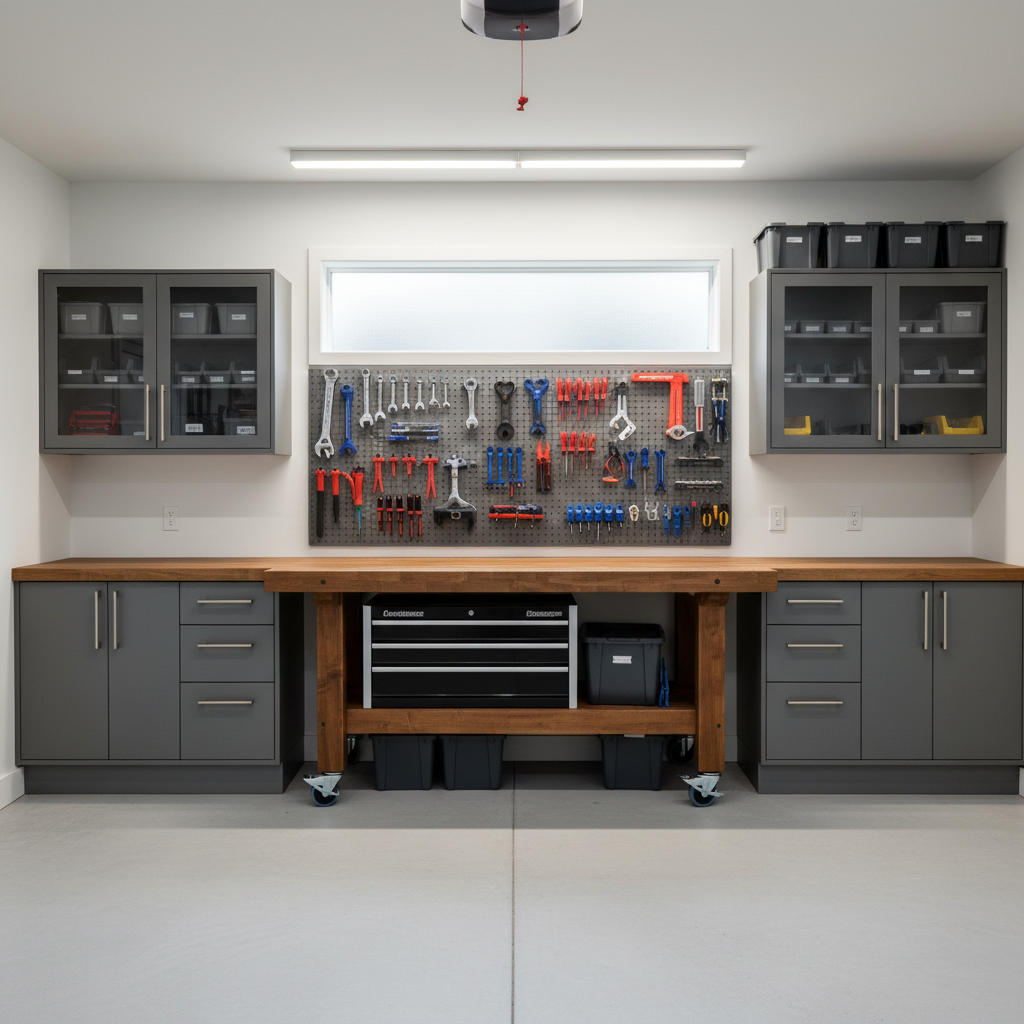
This guide focuses on what actually drives satisfaction in 2026: stability, top durability, height comfort, smart storage, and power management. You’ll also get a quick decision checklist, a comparison table, and a few setups that tend to work for common garage scenarios.
What “best” really means for a garage workbench in 2026
Most buyers get stuck because “best” gets reduced to one spec, usually weight capacity. In a garage, the better question is whether the bench supports how you work: hand tools, power tools, automotive tasks, electronics, or messy finishes.
- Stability under side-load: Planing, sanding, and vise work create sideways force, a bench that “walks” is a bad time.
- Top material that matches abuse: Hardwood feels great, steel survives fluids, thick plywood is a value champion.
- Right height for your body: A bench that’s too low ruins your back, too high makes clamping awkward.
- Storage that reduces table clutter: Drawers and pegboard can matter more than an extra foot of length.
- Power and lighting readiness: Outlets, cord routing, and under-shelf lighting become quality-of-life upgrades fast.
According to OSHA (Occupational Safety and Health Administration), keeping work areas orderly and controlling slip/trip hazards is a core safety practice in many shop settings, a bench that helps you manage cords and clutter supports that goal.
How to choose the right size, height, and load capacity
Before brands and features, measure. Garages are full of “invisible constraints” like door tracks, water heaters, and the space you need to park when winter hits.
Quick sizing rules that usually hold up
- Length: 4–6 ft fits most one-bay garage walls; 6–8 ft shines for woodworking or assembly, but only if you can keep clearance.
- Depth: 24 in is comfortable for most work; 30 in gives more laydown space but can trap clutter.
- Height: Many people like 34–38 in; if you do detailed work, slightly higher often feels better. Adjustable legs are a safe bet if multiple people use the bench.
- Load: Think in “real use,” vise pressure, tool chests on top, a small engine block. Capacity matters, but frame stiffness matters more.
If you’re shopping for the best workbench for garage workshop builds involving heavy clamping or planing, prioritize a rigid frame, thick top, and leveling feet. A high load rating on paper won’t stop racking if the base design is flimsy.
Workbench top materials: what holds up (and what gets annoying)
The top is where you feel every shortcut. If your projects bounce, stain permanently, or dent too easily, you’ll notice daily.
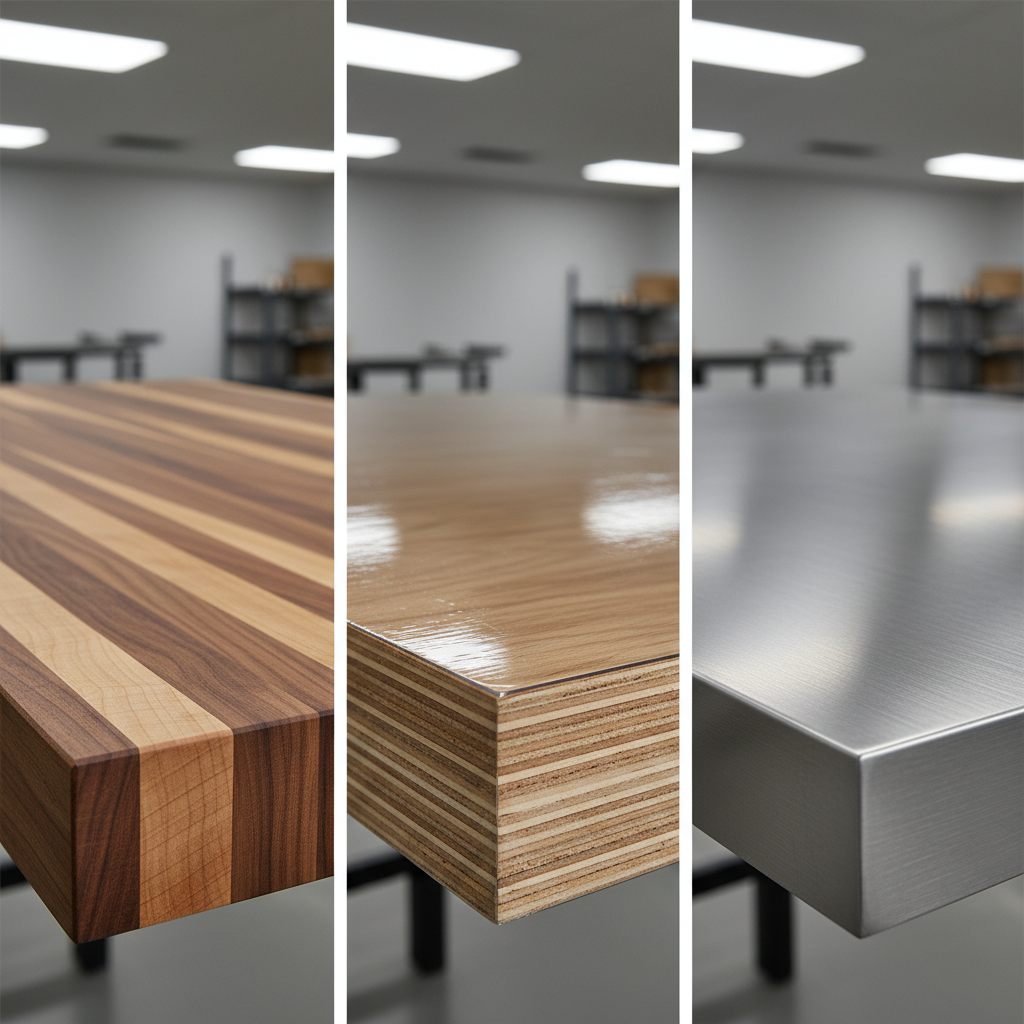
- Hardwood / butcher block: Great for woodworking and general use, friendly to tools, can be resurfaced. Not ideal if you routinely spill oil, brake fluid, or harsh solvents.
- Plywood (thick, multi-layer): Often the best value, especially if you add a replaceable hardboard skin. Good stiffness per dollar.
- Steel top: Excellent for automotive and metal work, easy cleanup, less worry about chemicals. Downsides include noise, glare, and less grip unless you add a mat.
- MDF: Flat and cheap, but swells with moisture and dents easily, typically better as a sacrificial layer than a “forever” top.
One practical compromise that keeps showing up in real garages: a sturdy wood top with a replaceable cover for messy work. It’s not glamorous, but it keeps the bench versatile.
Comparison table: common garage workbench types (pros, cons, best fit)
Instead of trying to crown one universal winner, this table helps you match bench type to typical garage reality.
| Type | Best for | Pros | Trade-offs |
|---|---|---|---|
| Fixed heavy-duty steel frame + wood top | Mixed projects, daily use | Stable, versatile, easy to mount vise | Less portable, needs good placement |
| Mobile workbench with locking casters | Small garages, shared parking space | Reconfigurable, can roll to the driveway | Casters add flex unless very high quality |
| Butcher block woodworking bench | Hand-tool woodworking | Dog holes, vises, mass for planing | Not happy with oils/chemicals, often pricier |
| Stainless/steel-topped service bench | Auto, small engine, messy tasks | Cleans fast, handles fluids | Noisy, can scratch parts without mats |
| Wall-mounted fold-down bench | Very tight spaces | Saves floor space | Limited load, wall structure matters |
A fast self-checklist to pick “your” best workbench
If you want to narrow to two or three options quickly, this checklist does the job.
- My main tasks: woodworking, auto maintenance, electronics, crafting, general repairs.
- My typical workpiece size: small parts, cabinet panels, bikes, lawn equipment.
- My garage reality: park inside daily, park sometimes, never park inside.
- Need to move it?: yes for space, yes for dust control, no it stays put.
- Clamp/vice needs: must mount a vise, occasional clamping, minimal clamping.
- Mess level: sawdust, oil/grease, paint/finish, all of the above.
- Power access: outlets nearby, need integrated power strip, need cord management.
If you check “park inside daily” and “need to move it,” the best workbench for garage workshop use often ends up being a mobile bench with excellent casters and a top that tolerates abuse, not the heaviest woodworking bench on the internet.
Practical setups that work (by common garage scenarios)
Below are setups that tend to feel “right” once you live with them, not just admire them on day one.
1) One-car garage, you still park inside
- Choose a 24 in deep bench or a mobile bench that can tuck against the wall.
- Use locking casters and add a wall-mounted pegboard to keep tools vertical.
- Plan a “roll-out zone” so you can work with the door open without blocking everything.
2) Two-car garage, one bay is workshop-heavy
- Fixed bench on the side wall, 5–7 ft long often feels balanced.
- Add a small rolling cart for frequently used tools, it keeps the main top clear.
- Consider under-bench drawers instead of open shelves if dust drives you nuts.
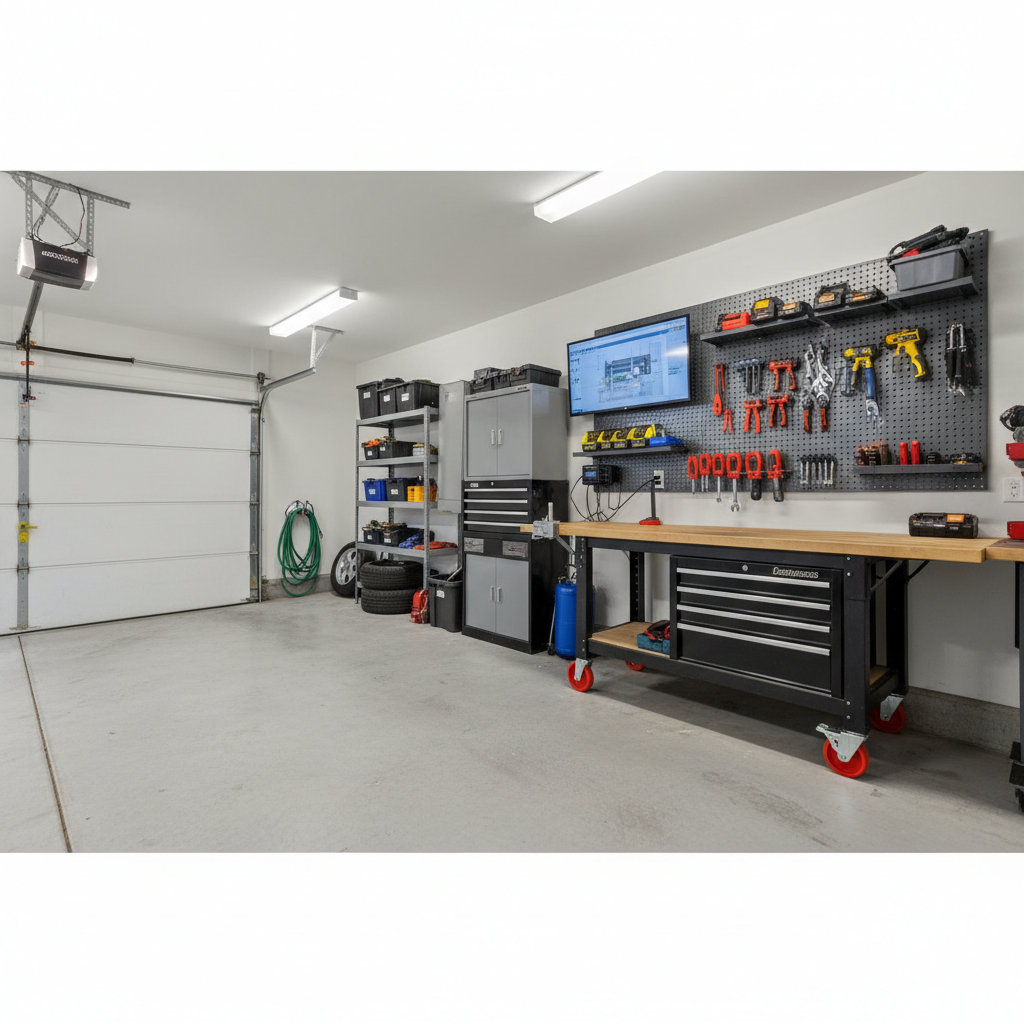
3) Automotive and small engine work
- Favor a steel top or a wood top with a chemical-resistant mat.
- Prioritize easy cleanup, a lip or backsplash can help keep small parts from rolling away.
- Use a bench height that keeps you from hunching, fatigue is where mistakes start.
4) Woodworking-focused garage
- Mass matters, a heavy base and thick top reduce chatter during hand-tool work.
- Plan for clamping, dog holes, front and tail vises if you use them often.
- Dust strategy counts, leave space for a shop vac or dust extractor parking spot.
Buying tips and common mistakes (so you don’t “upgrade” twice)
This is where people burn money: buying for a hypothetical future shop, then fighting the bench every weekend.
- Mistake: chasing max weight capacity. Better target: stiff frame, good joints, and a top that won’t sag.
- Mistake: ignoring leveling. Garages often slope toward the door, leveling feet matter more than you’d think.
- Mistake: no plan for power. A simple mounted power strip and cord hooks prevent the “cord nest” problem.
- Mistake: too deep, too cluttered. Deep benches become storage shelves in disguise, especially in busy households.
- Mistake: flimsy casters. If you go mobile, buy for the casters as much as the bench.
According to CDC guidance on preventing slips, trips, and falls, keeping walking paths clear and managing cords can reduce common injury risks, a workbench that encourages tidy routing helps, though your habits still do most of the work.
Key takeaways and the “good” choice to make this week
If you’re trying to choose the best workbench for garage workshop projects in 2026, anchor on fit and stability, then let storage and accessories follow. The bench that stays clear, stays level, and supports clamping is the one you’ll keep.
- Measure first: length, depth, and clearance for doors, cars, and walkways.
- Pick a top for your mess: wood for versatility, steel for fluids, plywood for value.
- Don’t skip leveling: it changes how “solid” a bench feels more than many upgrades.
- Buy for your workflow: if you must park inside, mobility and footprint win.
Your next move can be simple: measure your wall space tonight, decide whether the bench must roll, then choose a top material that matches the most punishing job you do monthly. That’s usually enough to narrow to a confident purchase.