
pegboard hook set garage searches usually come from one place, tools keep sliding off, the wall looks “organized” but never stays that way, and every quick job turns into a scavenger hunt.
A good hook set fixes more than storage, it reduces tool damage, frees workbench space, and makes it easier to notice what’s missing before you start a project. The catch is that not every hook works with every pegboard, and “universal” can mean “sort of, until it fails.”
This guide breaks down what matters in real garages, board compatibility, hook shapes, load ratings, and the small setup tweaks that stop the common annoyances, wobble, sag, and surprise drops.
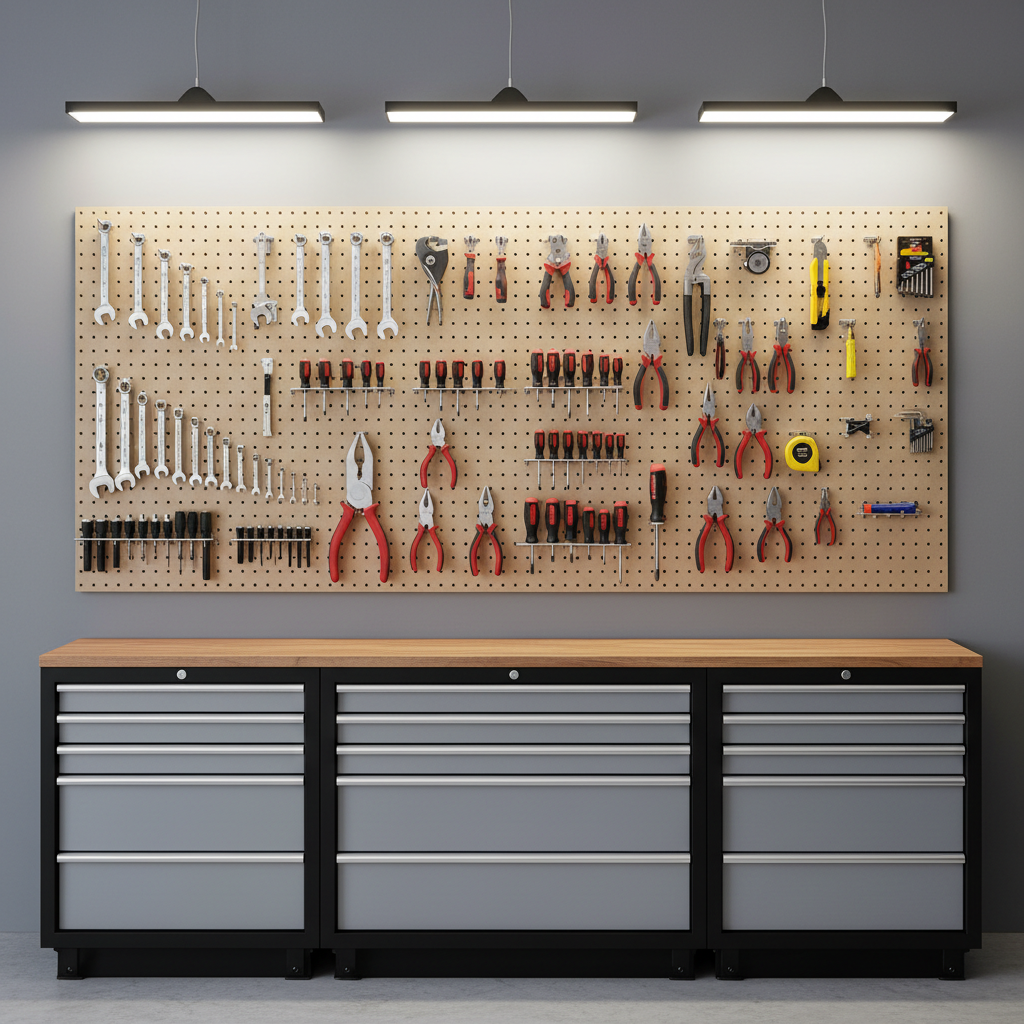
What typically goes wrong with pegboard hooks in a garage
If you’ve tried a few hooks and still feel frustrated, you’re not alone, most issues come from fit, not effort. In many garages, the wall sees vibration, temperature swings, and heavier tools than a craft room setup ever will.
- Hooks pop out when the pegboard holes and hook prongs don’t match, or the board flexes.
- Tools tilt forward when the hook length or angle doesn’t match the tool’s center of gravity.
- Overloaded single hooks carry weight better in theory than in daily use, especially with leverage from long tools.
- Wrong spacing makes handles collide, so you stop putting tools back because it’s annoying.
There’s also a quiet culprit, many sets include lots of “nice-to-have” shapes and too few of the ones you need every day, so your layout never feels finished.
Compatibility first: pegboard types, hole sizes, and thickness
Before comparing any pegboard hook set garage options, confirm what your board actually is. Hook sets are often sold by hole diameter, but board thickness and material affect how secure the prongs feel.
Common pegboard standards you’ll see
- 1/4-inch hole hardboard: very common in older garages, can flex under load unless supported well.
- Metal pegboard: stiffer and cleaner looking, often better for heavier tools.
- Plastic pegboard: varies widely, good brands hold up, cheap versions can deform under weight.
According to OSHA, good housekeeping and keeping work areas free of trip hazards is a basic part of workplace safety. A garage isn’t a regulated jobsite, but the principle applies, when tools don’t have a stable home, they end up on the floor or on the edge of a bench.
Quick rule: if your pegboard flexes when you press it, plan on stronger retention hooks, more support behind the board, or lighter loads per hook.
Hook shapes that actually matter (and what they’re for)
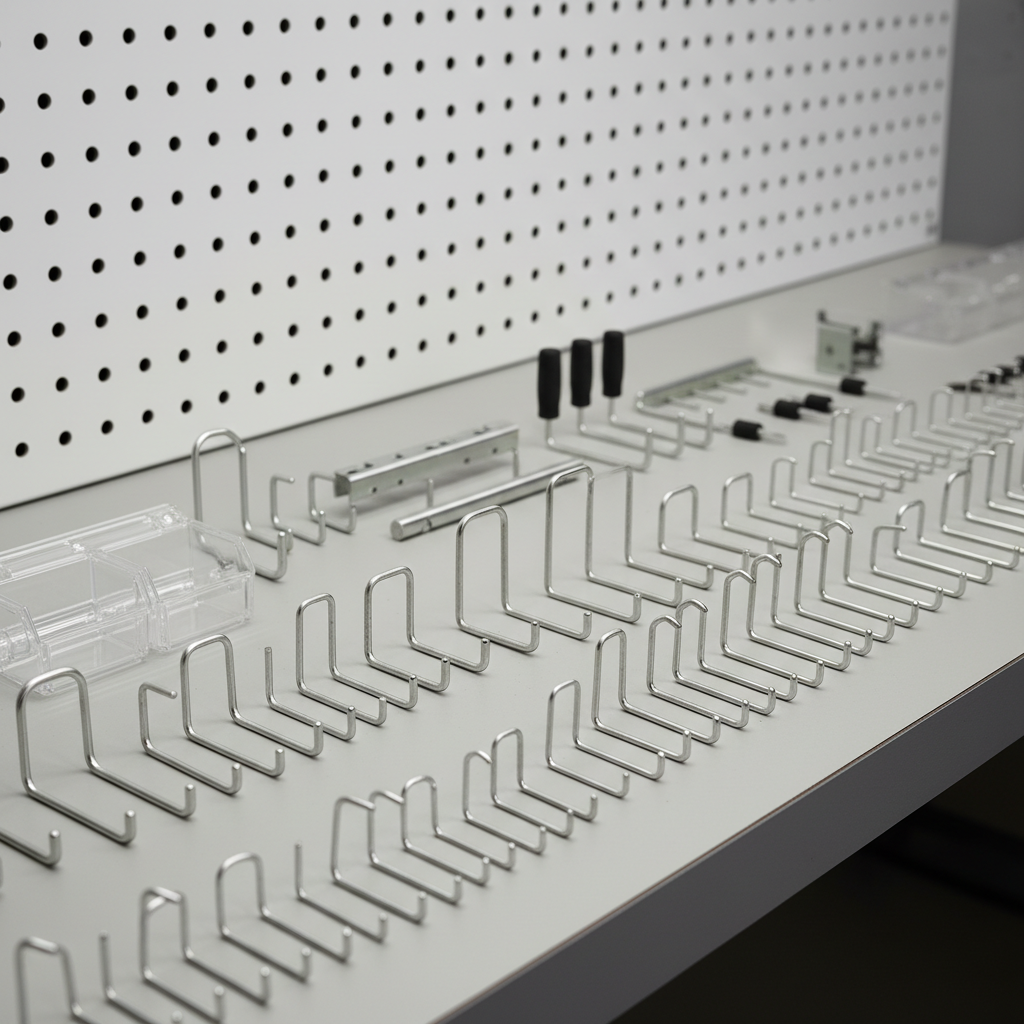
Most people don’t need 30 different hook styles. They need the right mix. Here’s how to think about it so you buy once and stop “making it work.”
| Hook type | Best for | What to watch |
|---|---|---|
| Single straight hook (short/medium) | Hammers, tape measures, small hand tools | Can spin if tool is uneven, add a retainer if possible |
| Double-prong hook | Pliers, hand saws, heavier items | Needs two adjacent holes, check spacing on your board |
| J-hook / curved hook | Extension cords, hoses, leaf blower tube | Look for deeper curve so coils don’t slip off |
| Angled hook | Wrenches, screwdrivers, tools with handles | Angle should keep handles “back,” not tipping forward |
| Loop / ring holder | Spray cans, tape rolls, small parts | Weight rating varies a lot, don’t overload |
Key point: for long tools, leverage matters more than raw weight. A broom can feel “light” but still pry a weak hook loose if it sticks out far.
A fast self-check: what kind of hook set do you need?
If you answer these honestly, you’ll narrow the set size and quality level quickly, and you’ll avoid paying for shapes you never use.
- Your heaviest hanging item is… a power tool, a nailer, or a battery charger cluster, plan on sturdier metal hooks and better retention.
- Your board moves when you pull a tool, prioritize locking hooks or add bracing behind the board.
- You want “grab-and-go” speed, choose more double hooks and angled holders so tools stay oriented.
- You store cords and hoses, get deeper J-hooks and consider spacing that prevents tangles.
- Your tools vary a lot in size, pick a mixed kit plus a small add-on pack of your most-used hook length.
If your current setup fails mainly because hooks fall out, that’s a compatibility or retention issue, not a “you need more hooks” issue.
How to set up a pegboard tool wall that stays organized
This is where most garages win or lose. The layout matters, but so does how you anchor, space, and “proof” the wall against real use.
1) Support the board so hooks don’t pry it loose
- Use furring strips or a mounting system that creates a gap behind the board, hooks need clearance.
- Add more fasteners than you think you need, especially near high-use zones.
- If you’re unsure about studs or wall material, consider asking a contractor, garages vary a lot.
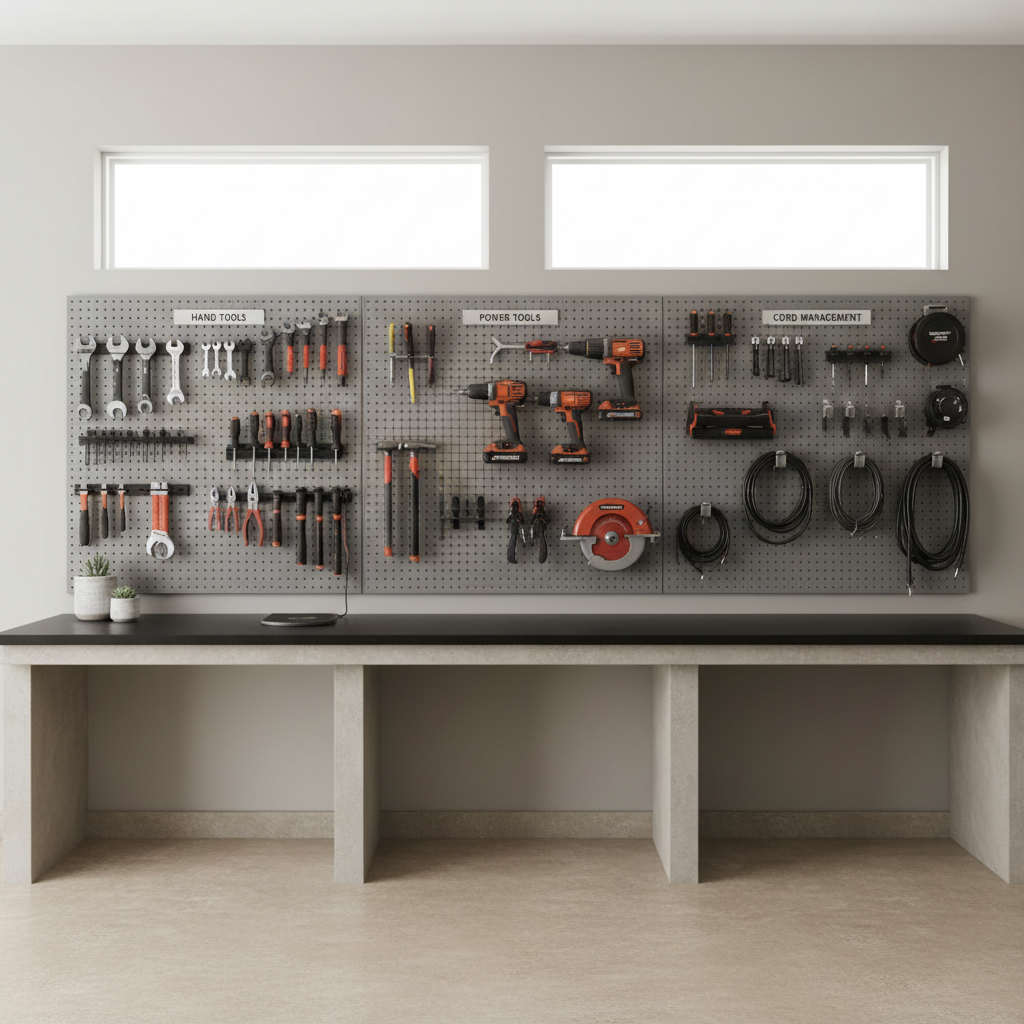
2) Group by workflow, not by tool brand
- Put “every project” tools at chest height, tape measure, utility knife, driver bits.
- Keep dirty tools (yard, auto) separated so they don’t grime up your clean hand tools.
- Leave breathing room, tight layouts look good for a day, then get abandoned.
3) Use retention where it counts
Locking tabs, pegboard hook clips, or hooks with stabilizer plates can make a big difference on hardboard. You don’t need them everywhere, just on the hooks that get yanked daily.
Choosing a hook set: what to look for (and what to ignore)
When you compare options, you’ll see a lot of marketing language. Focus on the boring stuff, it’s what keeps tools off the floor.
- Material and coating: thicker steel with a durable coating tends to resist bending and rusting, especially in humid garages.
- Retention design: locking or stabilizing features matter if your board flexes or if kids bump the wall.
- Clear load guidance: weight ratings are helpful, but treat them as conservative targets, leverage and pull angle change the real stress.
- Hook mix: a smaller set with the right shapes often beats a huge kit packed with rarely-used pieces.
- Board fit statement: confirm hole diameter and board thickness compatibility, don’t assume.
For many households, a pegboard hook set garage purchase works best when it’s paired with a small add-on of duplicates, extra 4-inch or 6-inch straight hooks, for example, since those disappear fast once you start hanging.
Common mistakes that waste money (and how to avoid them)
Some missteps are almost guaranteed, especially if you’re upgrading from a “pile of tools” situation and you want it fixed in one shopping trip.
- Buying only long hooks: long reach looks convenient, but it increases leverage, mix in short hooks for heavy items.
- Hanging everything on single hooks: double hooks reduce twisting and keep tools facing forward.
- Ignoring vertical spacing: tall tools need headroom, otherwise they snag and you stop using the wall.
- Overfilling the board: a packed wall becomes visual clutter, keep 10–20% open space for future tools.
- Skipping safety thinking: don’t hang sharp or heavy tools above where kids reach or where you park a car door swing.
If you’re storing chemicals or fuel nearby, it’s smart to follow manufacturer storage guidance and local fire code norms. According to NFPA, garages and home storage areas are common locations for fires to start, so keeping ignition sources and flammables managed is worth taking seriously.
Practical starter layout: a simple plan for most garages
If you want a setup that works without obsessing, start here and adjust after a week of real use.
Suggested baseline mix for a typical DIY garage wall:
- Short straight hooks for small hand tools and tape measures
- Medium straight hooks for hammers, mallets, and larger grips
- Double hooks for pliers sets, saws, and heavier tools
- Deep J-hooks for cords, hoses, and bulky items
- A couple of specialty holders for drills, batteries, or a small bin for fasteners
Do one small thing that feels almost silly, outline tool shapes with a marker or use simple labels. It cuts the “where does this go?” friction, especially if more than one person uses the garage.
Conclusion: make the hook set work like a system
A pegboard hook set is only “good” if it matches your board, your tool weight, and the way you actually grab things during a project. When hooks stop popping out and tools stop tilting, the garage gets easier to maintain, not just prettier on day one.
If you’re deciding today, pick compatibility and retention first, then choose a hook mix that matches your tool categories, after that, install with enough support so the wall stays solid.
Action step: take a 5-minute inventory of your top 15 most-used tools, then buy a set that covers those shapes with duplicates, your future self will notice.
FAQ
- What should I look for in a pegboard hook set garage kit?
Confirm your hole size and board thickness, then prioritize retention features and a practical mix of short, medium, double, and J-hooks. - Why do my pegboard hooks keep falling out?
Usually it’s board flex, poor fit between prongs and holes, or too much leverage from long tools, locking hooks or better backing support often helps. - Are metal pegboards better than hardboard for heavy tools?
Often yes because they’re stiffer, but installation still matters, even a strong board can fail if it’s not supported and fastened well. - How do I hang power tools safely on pegboard?
Use holders designed for the tool shape, keep heavier items lower on the wall, and avoid placing them where a fall could hit a vehicle or a walkway. - Do I need hook locks or clips?
If you frequently pull tools quickly, or your board flexes, clips can reduce annoyance a lot, for light-use walls you might skip them. - How many hooks do I need for a two-car garage?
It depends on how many tools you’re hanging versus storing in cabinets, many people start with a medium mixed set and add duplicates once the layout settles. - Can I use the same hook set for 1/4-inch and 1/8-inch pegboard?
Not reliably, the prong size differs, so you’ll want hooks matched to your board to avoid wobble and pop-outs.
If you’re trying to get your wall organized without trial-and-error purchases, a curated hook assortment with the right duplicates for your tool list can be the more “set it and forget it” path, especially when your pegboard is older or sees daily use.