
How to drill into concrete without hammer drill comes down to two things: choosing a true masonry setup and slowing the process way down so the bit can grind instead of skid and overheat.
If you’ve ever tried this with a regular drill and ended up with smoke, a shiny “polished” spot on the wall, or a stripped screw anchor, you’re not alone. Concrete doesn’t cut like wood or drywall, it abrades, and that changes how you apply pressure, speed, and cooling.
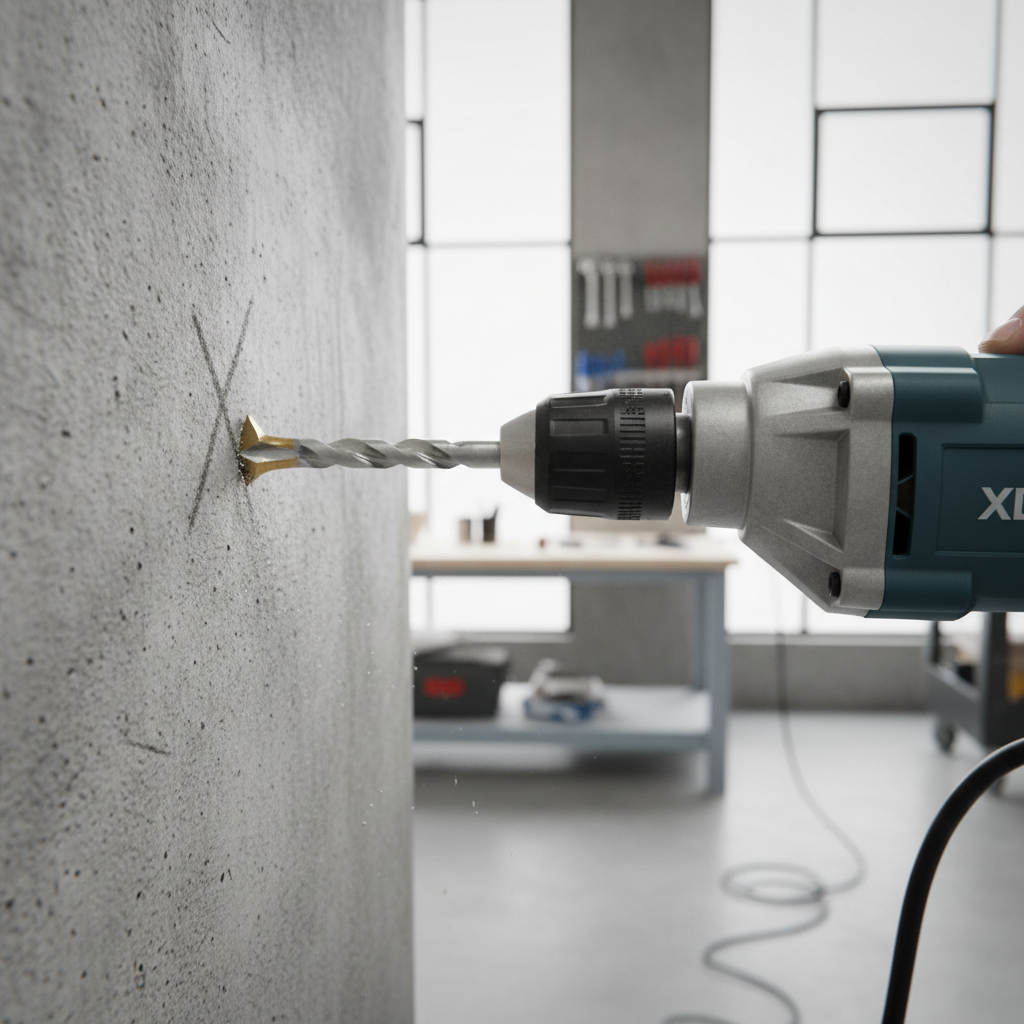
This guide focuses on what works for small-to-medium holes, like mounting a shelf bracket, TV mount into a basement wall, or securing a threshold. I’ll also flag the point where a hammer drill (or rotary hammer) stops being “nice to have” and becomes the sensible choice.
What changes when you drill concrete without impact
A hammer drill chips and pulverizes concrete while it rotates, that impact action does a lot of the heavy lifting. Without it, your drill bit must grind the concrete, and the friction heat becomes the main enemy.
- Progress is slower, especially in older, harder concrete or high-psi slabs.
- Bit temperature climbs fast, which can dull carbide and glaze the hole.
- You feel “stuck” when you hit aggregate (small stones) or rebar, neither cuts easily.
According to OSHA, silica dust from cutting or drilling concrete can be hazardous, so dust control and respiratory protection are not optional when you’re making more than a quick, tiny hole.
Tools and materials that actually make this doable
You don’t need a garage full of gear, but the wrong bit or anchor can waste an hour. Here’s what tends to matter most.
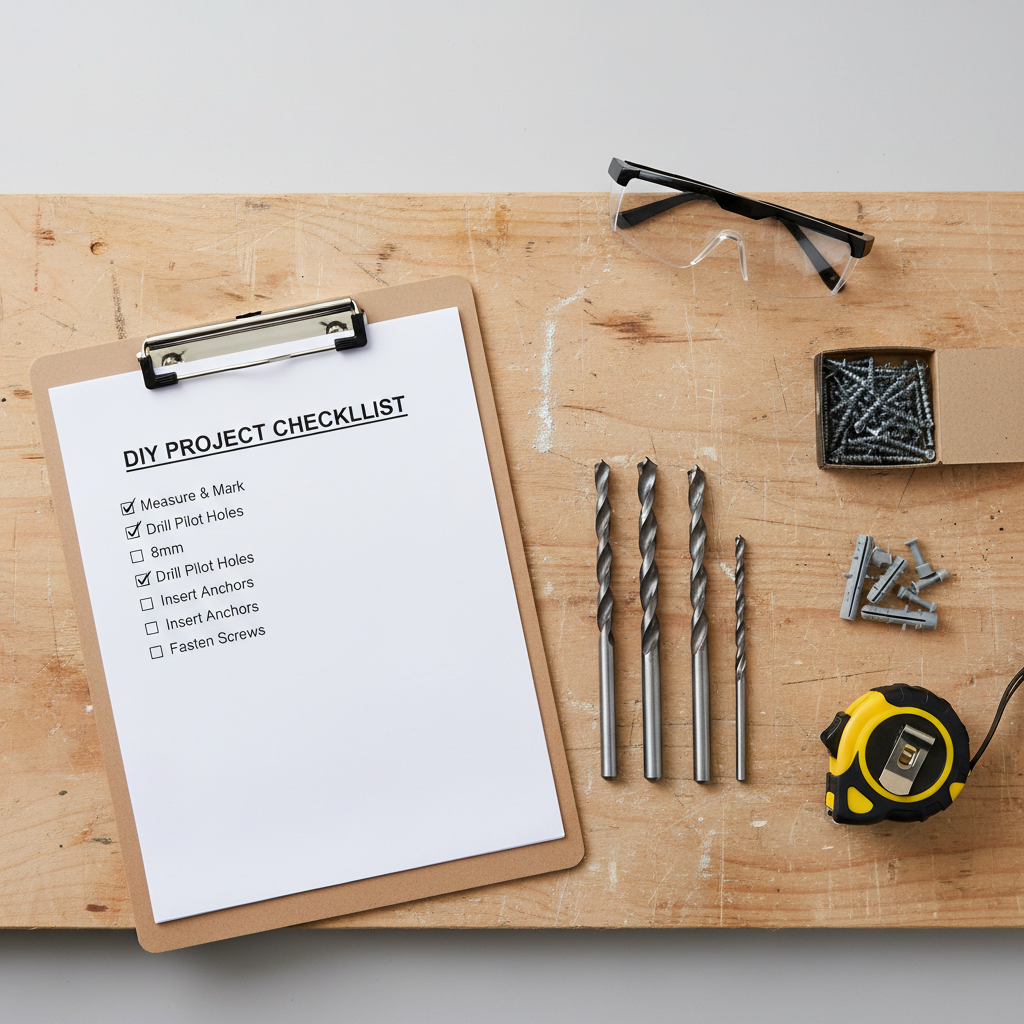
Recommended basics
- Corded drill or a high-torque 18V/20V cordless drill, regular mode (no hammer needed).
- Carbide-tipped masonry bits (not “multi-material” bits for tile/brick unless that’s truly your substrate).
- Painter’s tape for depth marking and to reduce walking at the start.
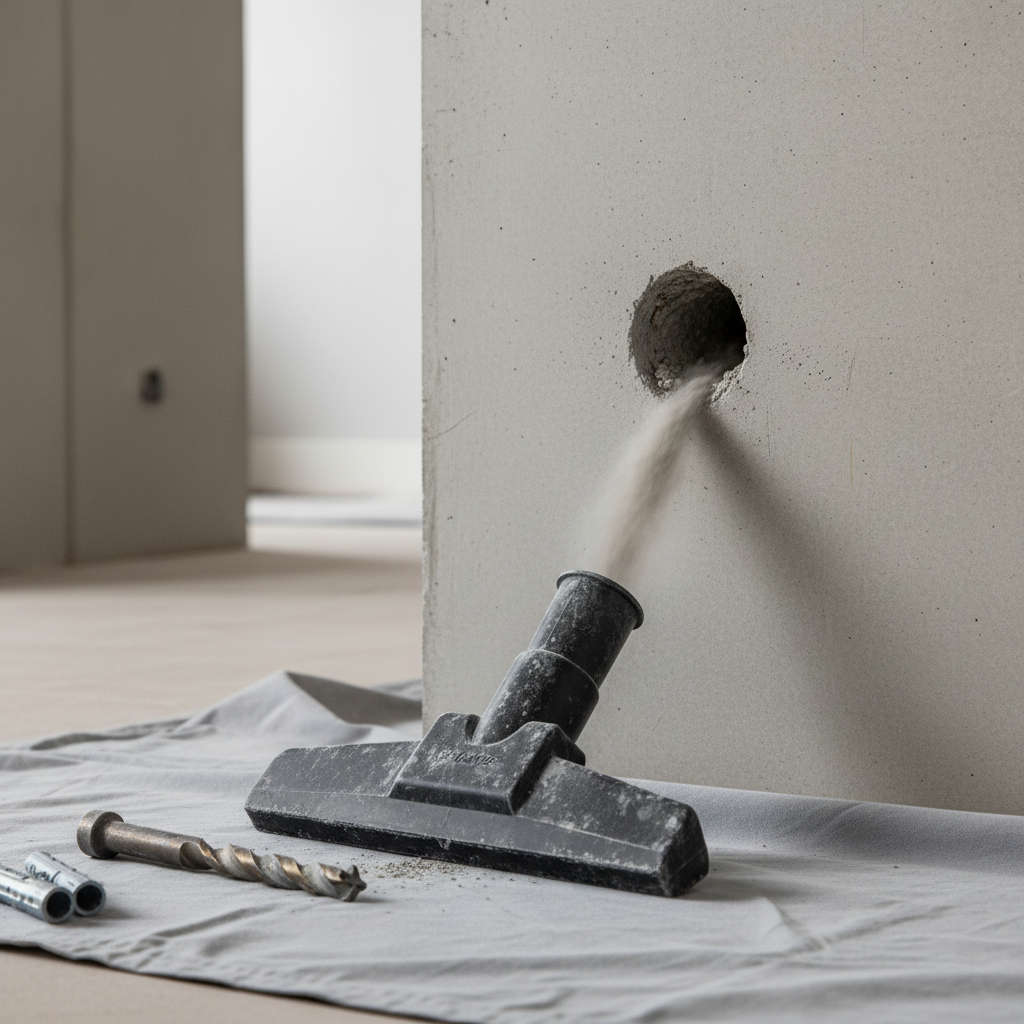
- Vacuum with hose close to the hole, or at minimum a brush and frequent cleanup.
- Safety gear: eye protection, hearing protection, and a respirator that’s appropriate for dust exposure.
Anchors: pick what matches the load
If you’re mounting something lightweight, plastic expansion anchors can work in some concrete, but they’re sensitive to hole accuracy. For more reliable holding in concrete, many DIYers move up to concrete screws (Tapcon-style) or sleeve/wedge anchors depending on load and edge distance.
Quick decision checklist before you start
This is the part most people skip, then wonder why the hole won’t deepen. Take 60 seconds and you’ll save 30 minutes.
- What are you drilling? Poured concrete, cinder block, mortar joint, or brick all behave differently.
- Hole size and depth? A 3/16 in x 1-1/4 in hole is far more realistic than 1/2 in x 4 in with a standard drill.
- Is the drill powerful enough? If your drill stalls easily in wood at low speed, concrete will be rough.
- Any red flags? Electrical conduit in walls, post-tension slabs, or unknown structural elements, when in doubt, ask a pro.
- Do you have extra bits? A single dull bit can make you think “concrete is impossible.”
Step-by-step: how to drill into concrete without a hammer drill
How to drill into concrete without hammer drill is mostly about controlling speed, pressure, and heat. If you push hard and spin fast, you often get a shiny divot and a dull bit, not a hole.
1) Mark and start clean
- Mark the hole location, then add a small “X” for visibility.
- Apply a small piece of painter’s tape over the mark to reduce bit walking.
- If you have a nail set or center punch, a light tap can help the bit bite, but don’t chip big chunks out.
2) Use low speed and steady pressure
- Set the drill to low gear if it has a gearbox.
- Start slow until you have a shallow groove, then maintain a moderate RPM.
- Lean in with firm pressure, but don’t force the motor into stalling.
3) Drill in short bursts and clear dust
- Every 10–20 seconds, back the bit out to clear powdered concrete.
- Vacuum the hole and the bit flutes, packed dust kills progress.
- If the bit is getting hot to the touch, pause and let it cool. Some people use a light mist of water for cooling, but do that cautiously and keep water away from the drill’s motor and any live electrical areas.
4) Respect aggregate and “hard spots”
If the bit suddenly stops advancing, you may have hit aggregate. Keep the same low speed, apply steady pressure, and let the carbide grind. If it still won’t move, shift the hole location slightly if your bracket allows, because sometimes you’re on a stone that’s simply miserable without impact drilling.
5) Hit your depth, then match the anchor
- Use tape on the bit as a depth flag.
- Drill slightly deeper than the screw embedment so dust has somewhere to go.
- Clean the hole well before setting any anchor or concrete screw.
Concrete drilling “cheat sheet” (sizes, anchors, and realism)
Exact sizing depends on the anchor brand and the fastener type, so always check the packaging. Still, this table helps set expectations and avoid the classic mismatch.
| Task | Typical hole range | Anchor/fastener options | How realistic without hammer drill |
|---|---|---|---|
| Light hooks, small cable clips | 3/16 in, shallow | Plastic expansion anchor, small concrete screw | Usually doable with patience |
| Shelf brackets, handrail brackets | 3/16–1/4 in | Concrete screws, sleeve anchors (light duty) | Often doable, depends on concrete hardness |
| TV mount into poured concrete | 1/4–3/8 in | Concrete screws or rated anchors | Can be challenging, test hole recommended |
| Ledger boards, heavy structural loads | 3/8 in and up | Wedge anchors/epoxy anchors | Many cases: bring a hammer drill or hire out |
Common problems and fixes (what you feel vs what’s happening)
Most “it’s not working” moments have a straightforward cause.
The bit just spins and polishes the surface
- Likely cause: wrong bit (not masonry), too much speed, not enough bite at the start.
- Try: switch to a carbide masonry bit, start slower, add tape, create a tiny starter divot.
Progress stops after 1/4 inch
- Likely cause: aggregate, packed dust, overheated/dulling bit.
- Try: pull out and vacuum, drill in shorter bursts, let the bit cool, consider moving the hole slightly.
The hole gets oversized or crumbly
- Likely cause: wobbling drill angle, pushing too hard, drilling near an edge, weak substrate like old block.
- Try: keep the drill square, reduce pressure, use a more forgiving anchor style, avoid edges when possible.
Concrete screw won’t drive or snaps
- Likely cause: hole too shallow, not cleaned, wrong bit size, or you hit something hard.
- Try: clean the hole thoroughly, confirm bit size, drill slightly deeper, drive the screw slowly with steady torque.
Safety and cleanup: dust, noise, and “unknowns” in walls
Concrete dust control is not just about a tidy garage. According to NIOSH, respirable crystalline silica exposure can increase health risks, so it’s smart to treat even small drilling sessions with respect.
- Wear eye protection, concrete dust and chips bounce in unpredictable ways.
- Use a respirator appropriate for dust, and ventilate the area.
- Keep the bit cool with breaks, overheating can cause binding and sudden grab.
- Be cautious on slabs and basements, if you suspect post-tension cables, rebar placement, or hidden utilities, consider professional advice before drilling.
And a practical tip: a helper holding a vacuum nozzle just under the bit is one of the simplest ways to keep dust down without buying specialty attachments.
When it’s time to stop fighting and get a hammer drill (or hire help)
You can absolutely learn how to drill into concrete without hammer drill for small work, but there’s a point where friction-only drilling becomes expensive and frustrating.
- You need many holes (for furring strips, framing, or long runs of fasteners).
- Hole diameter is 3/8 in or larger, or depth is several inches.
- The concrete is very hard and eats bits quickly.
- The fastening is safety-critical, like a heavy TV mount, railing, or overhead storage, when in doubt, ask a licensed contractor or structural professional.
Renting a hammer drill for a half day is often cheaper than burning through multiple masonry bits and still ending up with questionable holes.
Key takeaways (so you remember the important parts)
- Use a carbide masonry bit, most failures start with the wrong bit.
- Low speed wins, heat is the enemy when there’s no impact action.
- Drill in bursts and clear dust often, packed powder stops cutting.
- Match the anchor to the load, and keep holes clean before fastening.
Conclusion: the practical way to get clean holes without impact
If your goal is a few small holes, learning how to drill into concrete without hammer drill is mostly a patience game: correct masonry bit, slow RPM, steady pressure, frequent dust clearing, and realistic expectations when you hit aggregate.
If you want an easy next step, do a single test hole in an out-of-sight spot, confirm your anchor fit, then commit to the real mounting points. When the job size grows or the concrete fights back, renting a hammer drill is usually the cleanest “upgrade” you can make.