
How to inflate tires with a portable compressor comes down to three things: knowing your target PSI, getting a solid seal on the valve, and stopping at the right moment instead of “eyeballing it.” Do it right and the car feels steadier, braking often feels more predictable, and you avoid chewing up tires early.
A lot of people get stuck for practical reasons, not technical ones: the door-jamb sticker looks confusing, the portable inflator feels underpowered, the display jumps around, or the tire keeps hissing no matter how hard you press the chuck on. The good news is most of that has straightforward fixes.
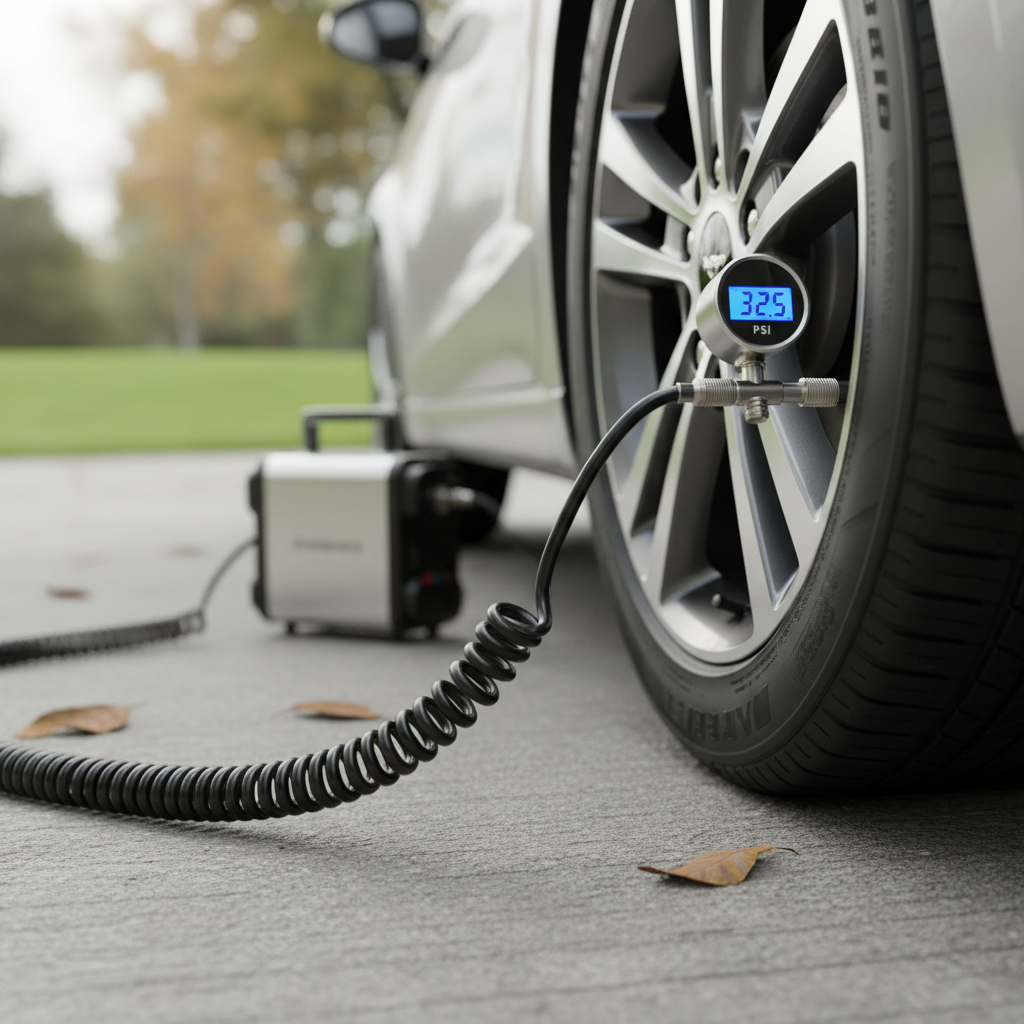
This guide walks you through the full workflow, plus quick checks to figure out why inflation sometimes feels harder than it should. I’ll also call out the mistakes that waste time, like chasing the PSI while the compressor is still “settling.”
What you need before you start
You don’t need a full garage setup, but a couple extras make the whole process smoother and more accurate, especially at night or on the side of the road.
- Portable air compressor (12V car plug, battery-powered, or cordless tool-battery style)
- Tire pressure gauge as a backup, even if your inflator has a screen
- Valve stem caps (keep them, they help keep debris out)
- Flashlight or headlamp
- Optional: a small spray bottle with soapy water (handy for slow leaks)
According to NHTSA, underinflated tires can overheat and increase the chance of a blowout, so it’s worth treating pressure checks as basic safety maintenance, not just “comfort.”
Find the correct PSI (don’t use the number on the tire)
The most common mistake is inflating to the big number printed on the tire sidewall. That number is usually the maximum the tire can hold, not what your vehicle should run day to day.
Where to look for your target pressure
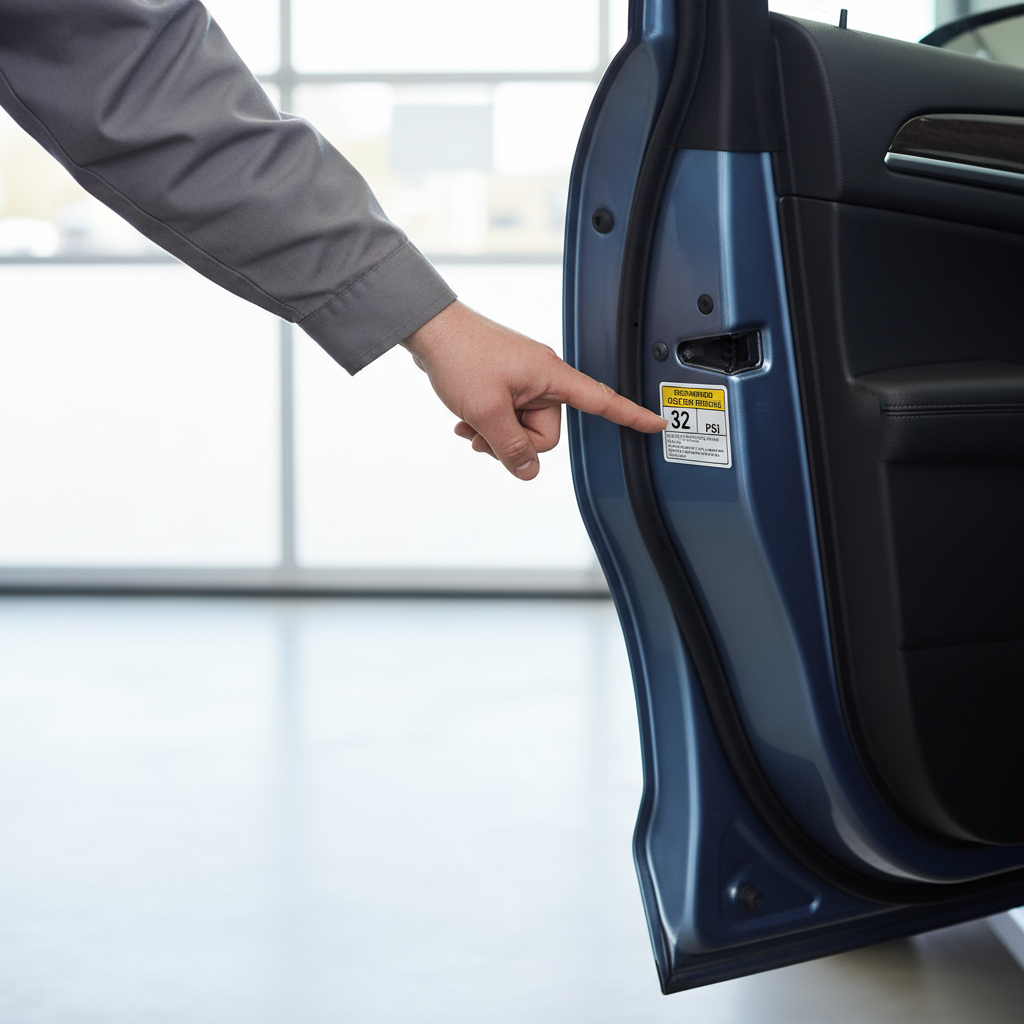
- Driver’s door jamb sticker (often the easiest and most reliable)
- Owner’s manual (good if the sticker is missing or unreadable)
- Sometimes the fuel door (varies by vehicle)
That sticker typically lists front and rear PSI, and it’s based on the vehicle’s weight and handling design. If you carry heavy loads or tow, the correct pressure can vary, and a tire shop or your vehicle manual usually provides guidance for those cases.
Step-by-step: how to inflate tires with a portable compressor
If you only read one section, read this one. The process is quick once you do it a couple times, but the order matters.
1) Park safely and let tires cool (when possible)
Park on a flat spot, engage the parking brake, and stay out of traffic. For the most accurate reading, measure when tires are “cold,” meaning the car hasn’t been driven much. If you just drove, you can still add air if needed, just avoid bleeding air out to chase a cold-PSI number.
2) Remove the valve cap and check current pressure
Use your gauge to get a baseline. This helps you estimate how long you’ll run the compressor and flags big drops that might point to a leak.
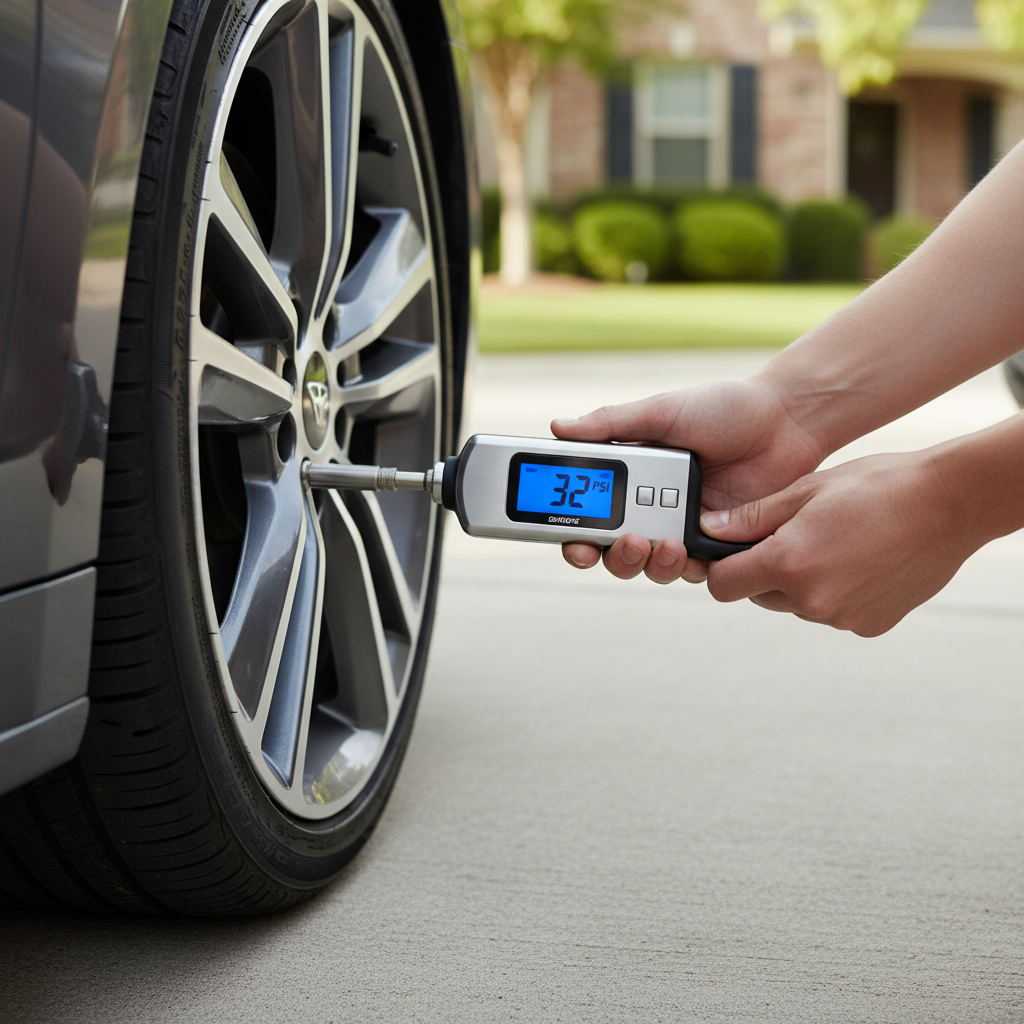
3) Connect the compressor correctly (this is where the hiss comes from)
Push or screw the chuck onto the valve stem until it seats firmly. If your inflator uses a locking lever, flip it to lock. A brief hiss during connection is normal; a constant hiss usually means the chuck isn’t square on the valve or the lever isn’t fully locked.
4) Power the compressor and set a target PSI (if available)
Many units let you set a target number and auto-stop. If yours does, set the target to the door-jamb PSI. If it doesn’t, you’ll inflate in short bursts and check with a gauge.
5) Inflate in controlled bursts and re-check
Run the compressor for 15–45 seconds depending on how low the tire is and how strong your unit is, then re-check. If the on-screen reading jumps around, pause inflation for a few seconds, then read again. That “settle time” prevents you from overshooting.
6) Stop at target PSI, then reinstall the cap
Once you reach the target, disconnect quickly and put the valve cap back on. If you lose 1–2 PSI during disconnect, that’s usually connection loss, not the tire “leaking,” but if it keeps happening you can inflate slightly above target and let it settle, or switch to a better-sealing chuck.
Quick self-check: what kind of situation are you in?
Before you troubleshoot for an hour, it helps to classify the problem. Most people fall into one of these buckets.
- Minor top-off: down 2–5 PSI, tire looks normal, TPMS light sometimes comes on in cold weather
- Moderate low: down 6–12 PSI, steering may feel softer, compressor takes a few minutes
- Very low / near-flat: tire looks visibly low, sidewall bulge, inflator may struggle, risk of tire damage if driven
- Recurring drop: you inflate, then it’s low again within days, likely slow leak or valve issue
If you’re in the “near-flat” category, be cautious: a portable unit can inflate it, but if the tire was driven while very low, internal damage is possible and a tire professional may need to inspect it.
Troubleshooting common portable compressor problems
The compressor runs but PSI barely increases
- Check the seal: a bad connection leaks faster than the inflator fills.
- Check power delivery: some 12V outlets weaken when the car is off; many compressors work better with the engine idling.
- Watch duty cycle: small inflators can overheat; if it feels very hot, let it rest per the manual.
The display jumps up and down
- Pause inflation for 5–10 seconds and read again.
- Verify with a separate gauge; built-in screens vary by model.
Air hisses constantly at the valve
- Re-seat the chuck straight on the valve stem, then lock it.
- Inspect the rubber gasket inside the chuck, if it’s cracked or missing you’ll fight leaks every time.
- If the valve core is loose, a valve tool can snug it gently, though if you’re unsure, a tire shop can handle it quickly.
Recommended PSI workflow by scenario (table)
Different situations call for slightly different habits. Here’s a practical cheat sheet.
| Scenario | What to do | What to avoid |
|---|---|---|
| Cold morning, TPMS light on | Check door-jamb PSI, top off to spec, re-check next day | Inflating to sidewall max “just in case” |
| Roadside top-off | Inflate to spec or slightly under if tires are hot, then re-check when cold | Letting air out of a hot tire to match cold PSI |
| One tire keeps losing air | Inflate, then inspect for nails, test with soapy water, schedule repair | Assuming it’s “normal” to lose 5–10 PSI weekly |
| Near-flat tire | Inflate enough to move safely, drive slowly to a shop if needed | High-speed driving before inspection |
Safety notes and common mistakes that waste time
Portable inflators are simple tools, but tires are safety-critical parts. If anything feels off, slow down and verify.
- Don’t chase the sidewall number. Use the vehicle placard PSI unless a professional recommends otherwise.
- Avoid long continuous runs on small compressors, overheating can shorten tool life and performance.
- Don’t ignore repeat low pressure. A slow leak often gets worse, not better.
- Be careful around hot brakes and traffic. Roadside work is more dangerous than most people expect.
- TPMS isn’t a precision gauge. It’s a warning system, confirm with a real gauge for accuracy.
According to NHTSA, you should check tire pressure regularly and before long trips, and you should follow the vehicle manufacturer’s recommended inflation pressure. That’s the baseline habit that prevents a lot of “mystery” handling issues.
When to get professional help (and why it matters)
If you can’t keep pressure stable, adding air is only a temporary move. A shop inspection is usually the fastest way to stop the cycle.
- Pressure drops again within 24–72 hours without major temperature swings
- You see a nail/screw or bubbling with soapy water (possible puncture)
- Sidewall damage, bulges, or cracks, these often aren’t repairable
- TPMS warning persists after correcting pressure, could be a sensor issue
- You drove on a near-flat tire, internal damage is possible even if it inflates
For repairs, many cases are simple plug-and-patch from the inside, but repairability depends on puncture location and tire condition, so it’s worth letting a tire professional make the call.
Key takeaways
- Use the door-jamb PSI, not the tire sidewall maximum.
- A steady seal at the valve stem matters as much as compressor power.
- Inflate in short bursts and let the reading settle to avoid overshooting.
- Repeated pressure loss usually means a leak, not “normal tire behavior.”
Conclusion: a simple routine that saves tires and stress
Once you know your target PSI and you’ve practiced the connection once or twice, how to inflate tires with a portable compressor becomes a five-minute routine instead of a frustrating project. Start by checking pressure cold when you can, inflate to the vehicle spec, then keep an eye out for repeat drops that hint at a leak.
If you want a low-effort next step, set a reminder to check pressures monthly, and stash your compressor and gauge somewhere you can actually reach without unpacking the trunk.
FAQ
How long does it take to inflate a tire with a portable compressor?
It varies by compressor size and how low the tire sits. A small 12V unit might take a few minutes to add 10 PSI, while stronger cordless models can be faster, but heat limits can slow you down.
Can I inflate tires to the PSI on the tire sidewall?
Usually no, that number is commonly a maximum rating. For daily driving, the safer starting point is the vehicle placard PSI on the driver’s door jamb, unless your manual or a tire professional suggests a different target for your use.
Should the car be on while using a 12V portable inflator?
Many 12V inflators perform better with the engine idling because voltage stays steadier. If you’re unsure, check the inflator manual and avoid draining an older battery.
Why do I lose air when I remove the chuck?
A brief puff is normal, but losing a couple PSI repeatedly can happen with a loose fit or a worn chuck gasket. A quicker disconnect, a better clamp-on chuck, or confirming with a separate gauge can help.
What PSI is “too low” to drive to a gas station?
If a tire looks visibly low or the vehicle feels unstable, driving can risk tire damage. Many people choose to inflate on the spot or use a spare; when in doubt, a roadside assistance or tire professional is the safer call.
My TPMS light stays on after inflating, what should I do?
Some systems need a bit of driving to reset, and others require a manual reset. If pressures are correct and the light stays on, a sensor or system issue is possible and a shop can scan it.
How often should I check tire pressure if I have TPMS?
TPMS is helpful but not a replacement for routine checks. A monthly pressure check, plus before long trips or big temperature swings, is a common, realistic schedule.
Can a portable compressor fix a slow leak?
It can keep you moving temporarily, but it won’t solve the cause. If you’re topping off every few days, it’s usually time for a puncture inspection, valve check, or bead leak diagnosis.
If you’re already carrying an inflator for emergencies, it’s worth turning it into a simple maintenance habit, because the same tool that saves you roadside can also help you catch a slow leak early and avoid buying tires sooner than necessary.