
Tube cutter for small pipes sounds simple until you’re under a sink, working in a tight stud bay, or trying to trim a short stub without deforming it. The usual pain points are familiar: the cutter won’t fit, the wheel wanders, the tube ovalizes, or you end up with a burr that later causes leaks or restriction.
This guide breaks down what actually matters when choosing a small pipe/tube cutter for copper and plastic, how to match the tool to the material, and the small technique tweaks that make your cuts look “pro” even if you only do plumbing work occasionally.
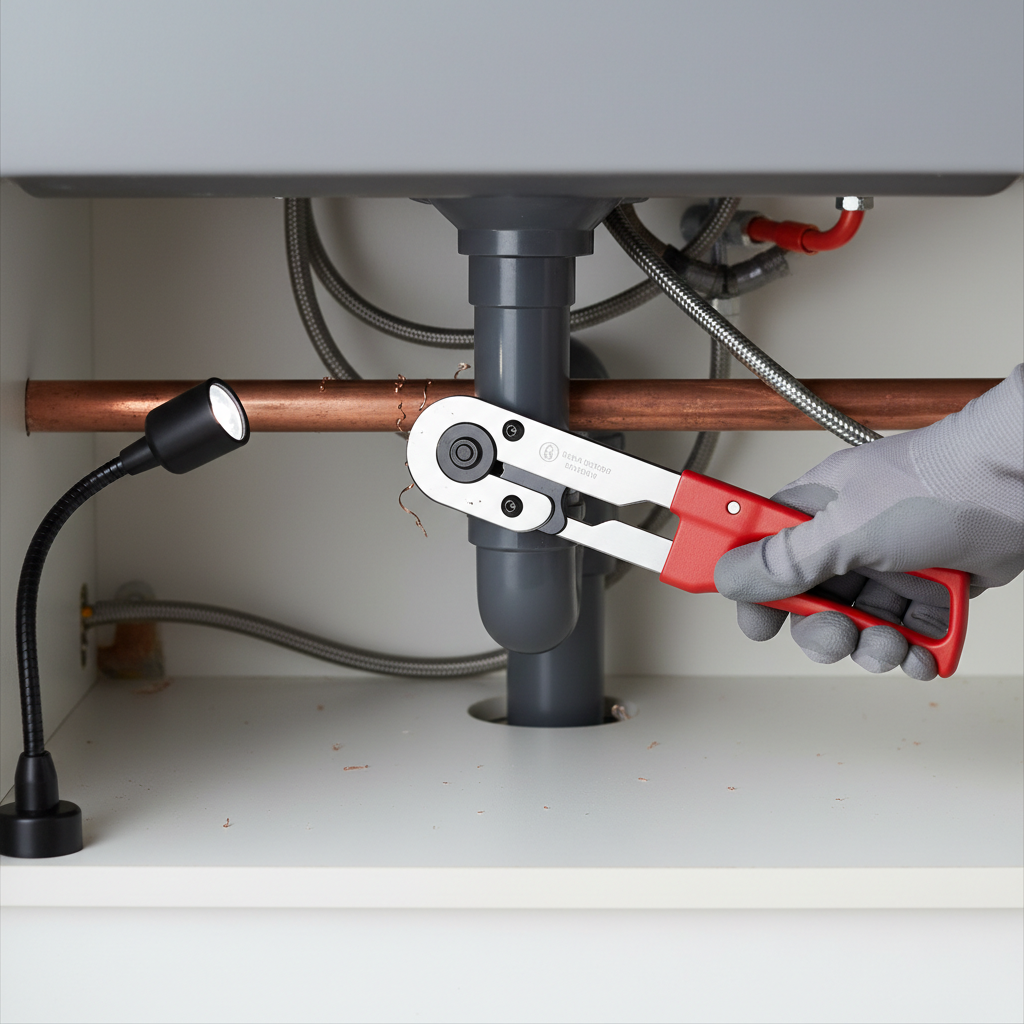
One quick note before we get into it: a “clean cut” is not just aesthetics. A square cut helps fittings seat correctly, and proper deburring reduces turbulence and helps joints seal the way they’re designed to.
Why small pipes are harder to cut than they look
Most problems come from geometry and material behavior, not user error. Small diameter tube gives you less surface area for the tool to track, and less stiffness to resist crushing.
- Tight clearance: Under sinks, behind toilets, HVAC closets, you often can’t rotate a standard cutter 360° without hitting framing or valves.
- Short stubs: A 1–2 inch exposed stub leaves little room for the cutter body, so the wheel starts off-center.
- Thin-wall tubing: Softer copper or thin plastic can ovalize if you over-tighten too quickly.
- Burr management: Copper and steel create a pronounced internal burr, plastics can leave a “lip” that interferes with push-to-connect or compression fittings.
Choosing a tube cutter for copper vs plastic (what matters, what doesn’t)
You can sometimes use one tool for both, but many jobs go smoother when you match cutter style to the material. The key is how the cutting edge interacts with the pipe wall.
Copper (Type M/L/K, soft or hard)
- Look for a sharp, replaceable cutting wheel and smooth rollers, this keeps the cut square.
- Compact “close-quarters” design helps when you can’t swing the handle far.
- Integrated reamer is handy, but a dedicated deburring tool often does a cleaner job.
Plastic (PVC, CPVC, PEX, PE)
- Ratchet cutters tend to give cleaner results on PEX/PE and many thin-wall plastics, with less chance of cracking.
- Wheel-style cutters can work on some plastics, but they may spiral the cut or create a raised edge that needs trimming.
- Avoid forcing brittle plastic: older CPVC can crack if stressed; if in doubt, slower cuts and proper support help.
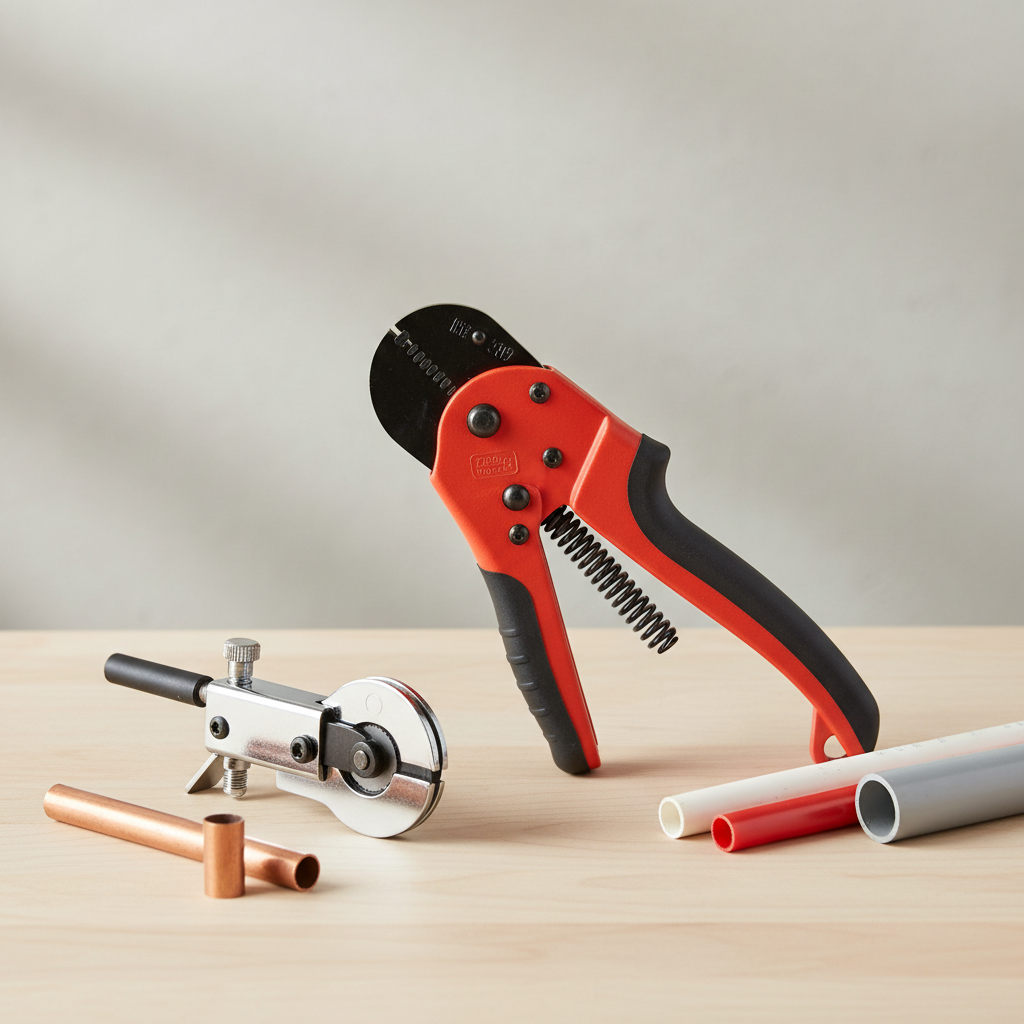
Quick decision table: which cutter should you use?
If you want a fast, practical match-up, use this as a starting point. Real-world constraints like access and existing fittings still matter.
| Material / Situation | Recommended cutter type | Why it’s usually the safer bet | Watch out for |
|---|---|---|---|
| Copper in open space | Standard wheel tube cutter | Square cut, controlled tracking | Over-tightening can flare burrs |
| Copper in tight clearance | Mini/close-quarters tube cutter | Fits where full-size won’t rotate | Needs patience, slower progress |
| PEX/PE tubing | Ratcheting plastic/tube shear | Clean perpendicular cut, minimal deformation | Dull blade can pinch or angle-cut |
| PVC/CPVC (small diam.) | Fine-tooth saw + miter box, or dedicated PVC cutter | Less cracking risk, better control | Must deburr and chamfer for fittings |
| Very short stub near a fitting | Mini cutter or fitting-saver strategy | Lets you cut close without prying | May require extra deburring time |
Self-check: are you using the wrong tool or the wrong technique?
Before you buy another tool, it’s worth diagnosing the failure mode. These quick checks usually reveal what’s actually going on.
- Your cut face isn’t square → cutter wheel tracking poorly, tube not supported, or you’re tightening too aggressively.
- The tube looks slightly oval → too much pressure per turn, or rollers not aligned for the diameter.
- Fitting won’t seat fully → internal burr (copper) or external lip (plastic) not removed.
- Plastic shows a white stress line or small crack → material may be brittle/aged, or cutter is pinching instead of slicing.
- You can’t rotate the tool → clearance issue, you need a close-quarters cutter or a different approach (cut elsewhere and re-route).
According to OSHA, hand and power tools should be used as intended and maintained in safe condition, and users should follow manufacturer instructions to reduce injury risk. That matters here because dull wheels and blades don’t just cut poorly, they can slip.
How to cut small copper tubing cleanly (step-by-step)
Tube cutter for small pipes works best on copper when you treat it like a controlled scoring operation, not a clamp-and-crush action. The goal is steady pressure and a consistent track.
1) Mark and support the tube
- Mark the cut line all the way around if access allows.
- Support both sides so the tube doesn’t vibrate or flex, especially with short stubs.
2) Seat the wheel, then tighten lightly
- Snug the knob until the wheel just bites, then rotate the cutter around the pipe.
- If you see the wheel walking, reset early, forcing it usually makes the cut angled.
3) Tighten gradually
- After a full rotation, tighten a small amount, then rotate again.
- Many crushed/oval cuts come from tightening too much per turn.
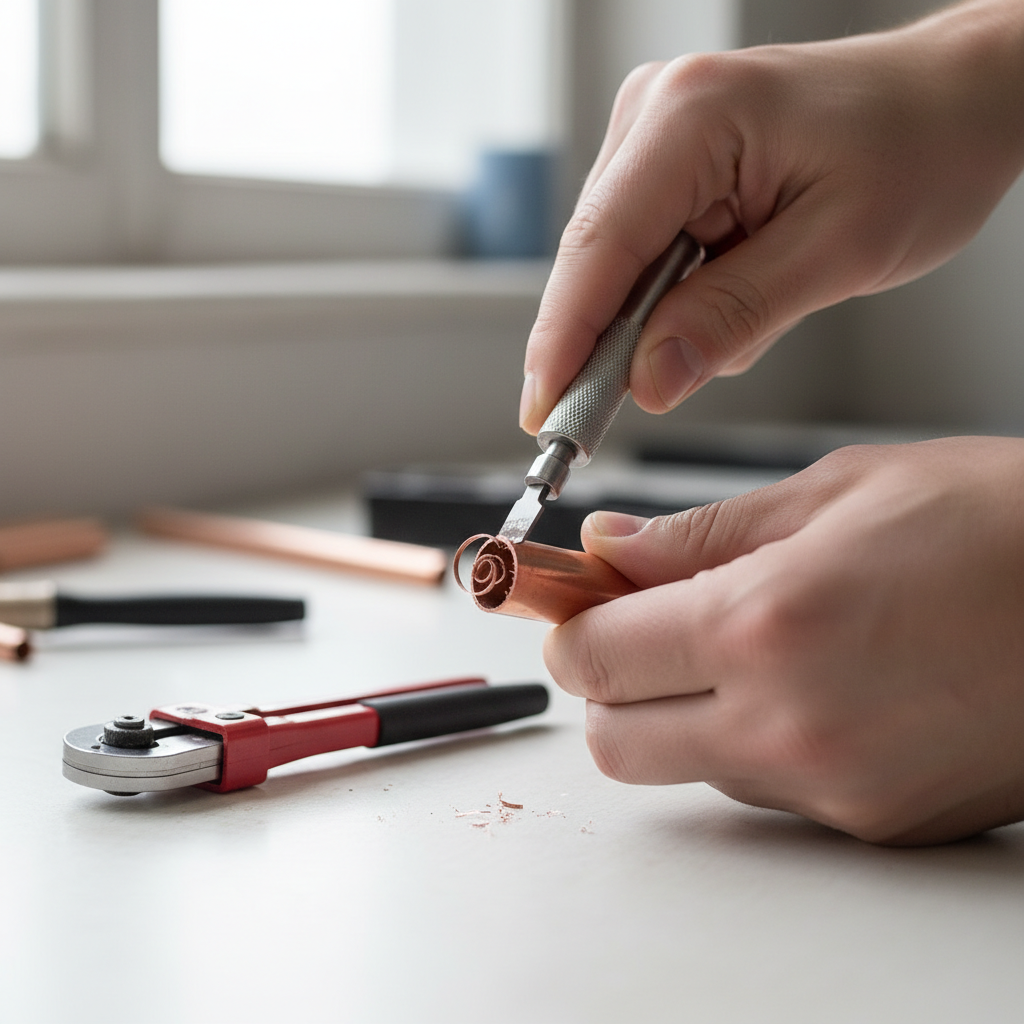
4) Deburr inside and break the outside edge
- Use a reamer or deburring tool to remove the internal ridge.
- Lightly knock down the outside edge so fittings start cleanly.
How to cut small plastic pipe without cracking or “pinching”
Plastics vary a lot. PEX and PE are forgiving, older CPVC often is not. If you’re unsure what you have, slow down and prioritize a straight cut with minimal stress.
PEX / PE
- Use a sharp ratcheting cutter, keep the blade perpendicular to the tube.
- Let the tool do the work; if you have to muscle it, the blade may be dull.
- Check for a perfectly round end; a slightly angled cut can cause issues with some fittings.
PVC / CPVC (small diameter)
- For cleanest control, a fine-tooth saw with a simple miter box often beats forcing a shear on brittle pipe.
- Deburr and lightly chamfer; many solvent-weld fittings seat better when the edge isn’t sharp.
- If the pipe looks aged, chalky, or already stressed, consider replacing a longer section rather than making a “close cut” near a fitting.
Practical buying tips: features that actually help in the field
If you’re shopping specifically for a tube cutter for small pipes, these features tend to make the difference between “it cuts” and “it cuts cleanly where I need it to.”
- Minimum clearance / swing radius: look at how much room the body and knob need to rotate, not just the pipe diameter range.
- Wheel access and replacement: replaceable wheels extend tool life and keep cut quality consistent.
- Stable rollers: better roller support reduces spiraling and keeps the cut square.
- Grip and feel: in wet spaces, a knob you can control with gloves matters more than flashy specs.
- Material compatibility clarity: if the listing is vague about plastics, assume it’s primarily for metal tubing and plan accordingly.
Key takeaway: if most of your jobs are copper in tight spaces, prioritize a close-quarters wheel cutter; if you do a lot of PEX, a quality ratchet shear pays back quickly.
Common mistakes that cause leaks, rework, or ugly cuts
- Skipping deburring: copper burrs can disrupt flow and interfere with fit, plastic lips can prevent full insertion.
- Over-tightening early: this is the classic reason small copper tubing becomes slightly oval.
- Cutting unsupported: the last part of the cut can tear or snap, leaving a rough edge.
- Using a dull wheel/blade: dull edges slip and wander, and that’s where knuckles get busted.
- Assuming one cutter fits all plastics: CPVC, PVC, PEX behave differently, your technique should change too.
When it makes sense to call a pro (or at least slow down)
If you’re working on a main supply line, anything tied to gas, or a section that would cause major water damage if it fails, it’s worth involving a licensed plumber. Also consider professional help when you see corrosion at joints, hidden leaks, or brittle plastic that cracks while you’re cutting.
In many cases, the safest move is simply to shut off water fully, relieve pressure, and confirm the pipe type before cutting. If you’re not confident about material identification or code requirements in your area, a local pro can prevent expensive do-overs.
Conclusion: a cleaner cut is mostly the right match and a calmer pace
A tube cutter for small pipes earns its keep when it fits the space and matches the material, then you run it with light, steady tightening and proper deburring. If you take one action today, check your current cutter wheel or blade condition, then add a proper deburring tool if you don’t already have one, those two changes solve a surprising amount of “mystery leaks” and bad-fitting joints.
If you’re shopping next, pick based on your real constraints: tight clearance copper work needs a compact wheel cutter, plastic-heavy work usually goes smoother with a sharp ratchet shear.
FAQ
What size range counts as “small pipes” for a tube cutter?
In most home plumbing and light HVAC work, people mean smaller diameters like 1/8 in to 1 in tubing, but each cutter has a specific range. Check both the diameter range and the tool’s clearance needs.
Can I use a mini tube cutter on PEX?
Sometimes it will cut, but it often leaves a lip or slightly spiraled end. For PEX, a sharp ratcheting cutter usually produces a squarer end with less fuss.
Why does my copper tube cutter leave a ridge inside the pipe?
That ridge is a burr created by the rolling cut. It’s normal, but you should remove it with a reamer or deburring tool so fittings seat correctly and flow isn’t restricted.
How do I cut copper when I can’t rotate the cutter all the way around?
A close-quarters cutter helps, but even then you may only get partial turns. Work slowly, keep pressure light, and consider whether cutting a more accessible section and re-connecting is cleaner.
Is a saw better than a cutter for small PVC or CPVC?
In tight or brittle situations, yes, a fine-tooth saw plus a miter box can be more controlled and reduce cracking risk. You still need to deburr and lightly chamfer afterward.
How often should I replace the cutting wheel?
When cuts start wandering, taking noticeably more turns, or leaving rough edges. If you do frequent copper work, keeping a spare wheel on hand saves time mid-job.
Do I need to sand the end after cutting plastic pipe?
Often you just need to remove the lip and sharp edge. Light deburring and a small chamfer helps many fittings; avoid aggressive sanding that changes pipe diameter.
If you’re trying to standardize your kit for service calls or DIY projects, it can be worth building a small “cutting and prep” set: a compact copper cutter, a dedicated plastic shear, and a deburring tool, it’s a simple combo that reduces rework without overbuying.