
nylon lock nut assortment kit shopping usually starts after a fastener backs off at the worst time, a mower deck rattles loose, a trailer fender starts walking, or a project stalls because you’re missing one odd size.
What makes this kit worth caring about is simple, you’re buying time and predictability. Instead of guessing thread sizes and running to the store twice, you keep common locknuts on hand and pick the right one in minutes.
One quick clarification before we get practical, “nylon lock nut” typically means a nyloc nut, a nut with a nylon insert that adds friction to resist loosening. It’s not magic, it’s just a proven way to keep joints tight when vibration shows up.
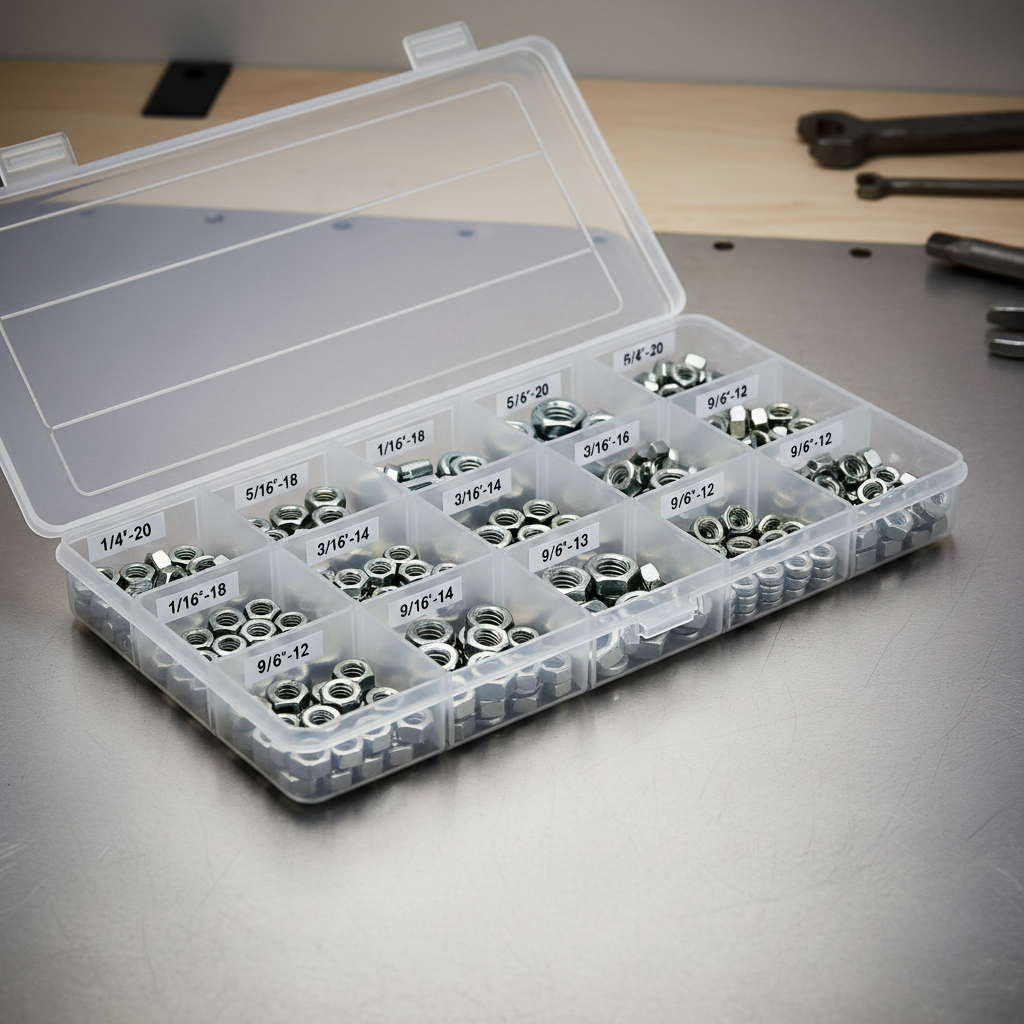
What a nylon lock nut is (and why it stays put)
A nyloc nut uses a nylon collar at the top of the nut. When you thread it onto a bolt, the nylon deforms around the threads and creates resistance, so the nut is less likely to back off under vibration.
According to NASA, threaded fasteners can loosen in dynamic environments, and locking features are often used to reduce self-loosening risk. That doesn’t mean every bolt needs a locknut, but it explains why they’re common in equipment, automotive, and shop builds.
- Best at: vibration-prone joints, light-to-moderate service temperatures, general repairs
- Not ideal for: high-heat locations that may degrade nylon, or joints needing frequent removal
Why buying an assortment kit usually beats buying singles
If you do occasional repairs, singles work fine. But most people who wrench even a little end up needing “one more size” sooner than they expect. A nylon lock nut assortment kit tends to pay for itself by preventing downtime, especially when the nearest store is not close or your project window is short.
- Speed: common sizes ready to grab, no thread-aisle guessing
- Consistency: you standardize on one style and finish for a cleaner build
- Less waste: you stop buying random small bags that never match
- Field-friendly: better odds you can finish a job the same day
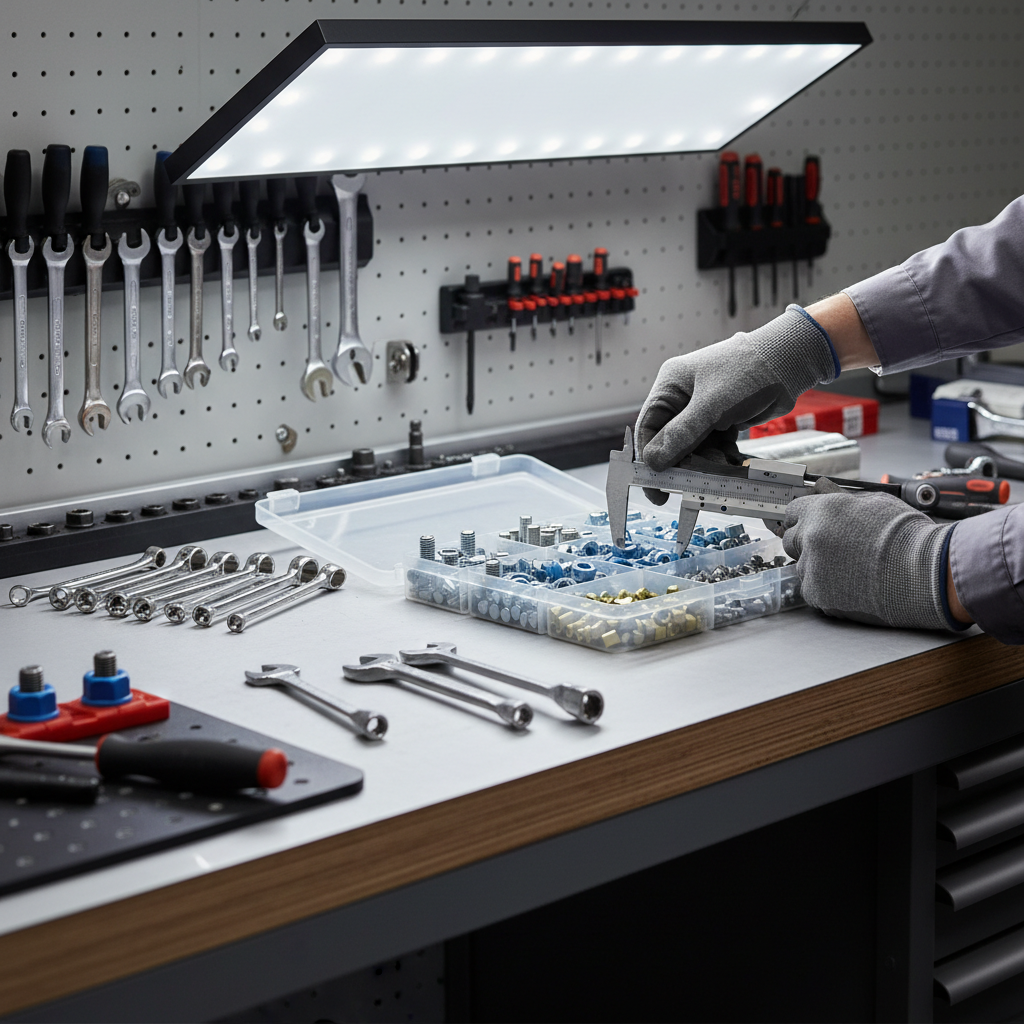
Choosing the right kit: sizes, threads, materials, and standards
Most “wrong kit” complaints come down to thread mismatch or using the wrong material for the environment. Before you click buy, match the kit to how you actually work.
SAE vs metric (don’t assume)
In the US, you’ll see both. Automotive and outdoor power equipment can be a mix, while many imported tools and appliances lean metric. If you only buy one kit, look at your most common bolts first.
- SAE/UNC/UNF: common in older American equipment, many shop fixtures
- Metric: common in newer vehicles, bikes, appliances, electronics enclosures
Coarse vs fine thread
Coarse thread tolerates dirt and frequent assembly better, fine thread can offer more adjustment and sometimes higher clamping for the same diameter, but it’s easier to cross-thread when you rush. Many nylon lock nut assortment kit options are coarse-thread because it covers more “real world” repairs.
Material and finish (where the kit will live)
- Zinc-plated steel: common, affordable, fine for indoor and light outdoor use
- Stainless steel: better corrosion resistance, useful near water, trailers, marine-adjacent setups
- Black oxide: looks clean, but corrosion protection varies by product, verify expectations
Grade/class and fit
For critical applications, match nut strength to bolt grade and follow manufacturer guidance. Many assortment kits are meant for general use rather than structural or safety-critical joints, so read labeling closely.
Quick self-check: do you need an assortment kit, and which type?
Use this as a fast decision filter. If you check multiple boxes, you’ll probably get real mileage out of a kit.
- You do repairs on mowers, generators, carts, trailers, or shop jigs where vibration is normal
- You often discover missing hardware mid-job and lose time sourcing it
- You keep a small “mobile” tool bag for field fixes
- You routinely work on either mostly SAE or mostly metric hardware (clear preference)
- You care about corrosion resistance (outdoor storage, road salt, coastal air)
If your work is mostly electronics or light indoor assemblies, a smaller metric kit might be the smarter buy than a big mixed-size box that never gets touched.
Practical use: how to pick the right nut and install it without drama
Using a nylon insert locknut is straightforward, but the “straightforward” part is exactly where people cross-thread bolts or strip soft hardware.
Step-by-step workflow
- Confirm thread: match diameter and pitch, if you feel any bind early, stop and re-check
- Inspect the bolt: damaged threads chew up the nylon insert and give you false confidence
- Hand-start: run it down by hand until resistance increases at the nylon collar
- Torque appropriately: use a torque wrench when the joint matters, especially on moving equipment
Where nyloc nuts shine (common US use cases)
- Small engines and lawn equipment shrouds, brackets, guards
- Trailers, light utility racks, cargo carriers (where vibration is constant)
- Shop fixtures, jigs, and assemblies you don’t want to re-tighten weekly
If the joint sees high heat, like near exhaust components, consider other locking methods. Nylon can soften or degrade depending on temperature, and at that point the “lock” part becomes a guess.
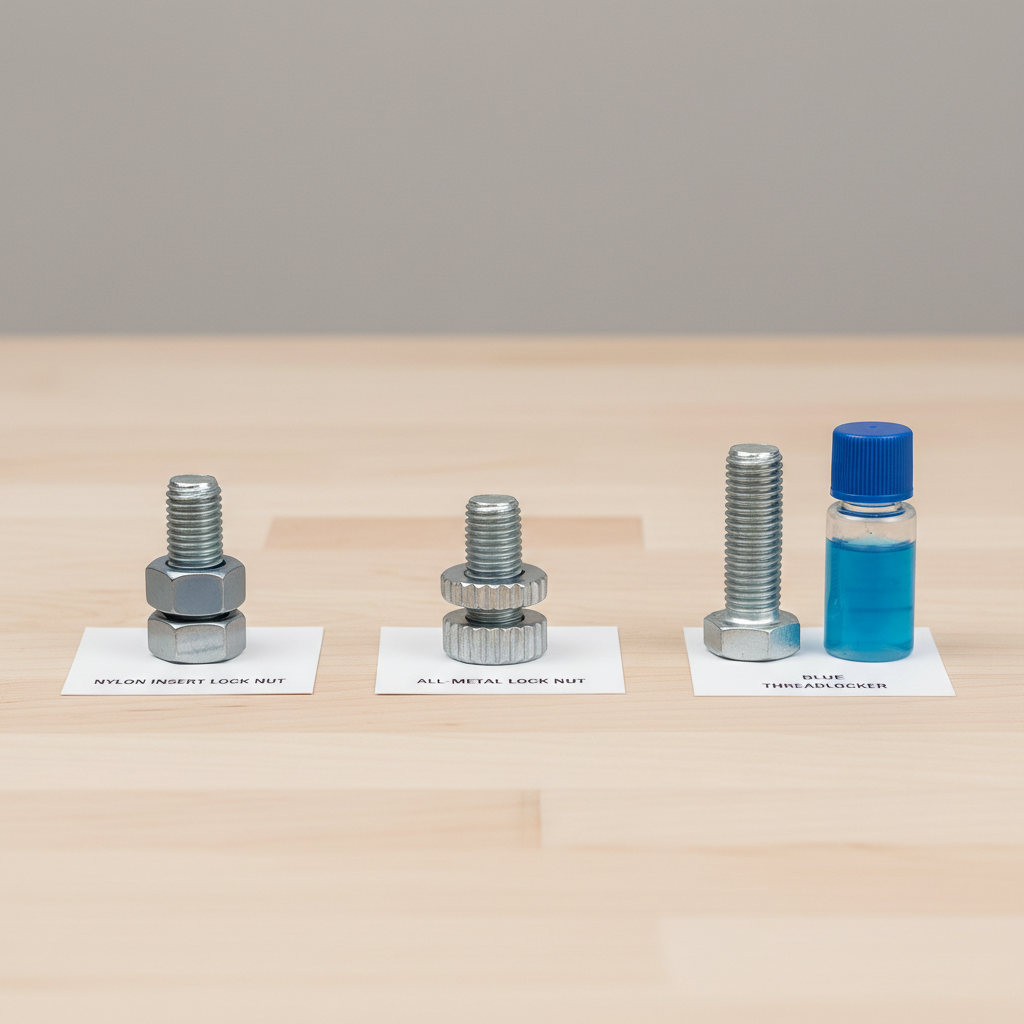
Comparison table: nylon lock nuts vs other locking methods
There’s no single “best” locking method, just the one that fits your joint, environment, and maintenance habits.
| Option | Pros | Cons / When to avoid | Typical use |
|---|---|---|---|
| Nylon insert lock nut | Fast, reusable sometimes, good vibration resistance | Nylon may not suit high heat; locking ability can drop after repeated cycles | General repairs, equipment, brackets |
| All-metal lock nut | Handles higher temperatures, strong prevailing torque | Can gall on stainless, may require more torque, can damage softer bolts | Higher heat zones, industrial use |
| Threadlocker (liquid) | Great for small fasteners, clean look, resists vibration | Needs cure time, messy if overused, removal can be harder | Automotive small bolts, machinery |
| Split lock washer | Cheap, widely available | Effectiveness varies by joint design; not a cure-all | Legacy builds, non-critical assemblies |
Common mistakes and what to do instead
Most failures aren’t because nyloc nuts “don’t work,” they’re because the joint design or installation is off.
- Using the wrong thread pitch: it will feel tight, but it’s just damage, verify with a gauge
- Reusing too many times: if prevailing torque feels weak, replace the nut
- Relying on locknuts to fix a bad joint: if parts are shifting, add proper washers, spacers, or redesign the stack
- Over-torquing: stripped threads beat any locking feature, follow specs when available
- Mixing stainless with stainless dry: galling can happen, consider anti-seize if appropriate and consult manufacturer guidance
And yes, storage matters more than people admit. If your assortment lives in a damp truck box, a stainless nylon lock nut assortment kit may save you from opening the case to a fuzzy rust surprise.
When to step up to a pro or follow OEM guidance
If you’re working on safety-critical assemblies, steering, suspension, load-rated trailer components, or anything where fastener failure can cause injury or property damage, treat the fastener choice like a real engineering decision. That usually means checking the service manual, OEM parts list, or consulting a qualified mechanic.
According to OSHA, employers must maintain workplaces free from recognized hazards, and fastener integrity can be part of safe equipment maintenance. For home users, the practical takeaway is similar, if the joint failure has real consequences, don’t guess, verify.
Key takeaways (so you can buy the right kit once)
- Match the thread system: SAE and metric kits are not interchangeable
- Buy for your environment: zinc for general use, stainless when corrosion is a recurring problem
- Use good habits: hand-start, confirm pitch, torque when it matters
- Know the limits: heat and repeated reuse can reduce locking performance
A nylon lock nut assortment kit is one of those boring shop purchases that makes you feel oddly organized every time you avoid a mid-job hardware run, and that’s the whole point.
If you want a simple next step, open your toolbox and identify the two or three bolt sizes you touch most, then buy a kit that heavily covers those sizes instead of chasing the biggest piece count.
FAQ
- What sizes should a good nylon lock nut assortment kit include?
For SAE kits, many people want 1/4-20, 5/16-18, 3/8-16 as everyday sizes, while metric users often reach for M6, M8, M10. Your “good kit” is the one that matches your most common bolts. - Are nylon lock nuts reusable?
Often yes for light-duty use, but the locking feel can fade after multiple cycles. If the nut spins on with little resistance at the insert, replacement is usually the safer call. - Can I use nylon insert lock nuts on exhaust or engine heat areas?
Usually not a great idea. Nylon may soften at elevated temperatures, so many mechanics choose all-metal lock nuts or other methods there, and it’s smart to follow OEM guidance. - Do I still need a washer with a nyloc nut?
Sometimes. A washer can protect surfaces and help distribute load, especially on softer materials or slotted holes. The lock feature prevents loosening, it doesn’t automatically fix poor load distribution. - Why does the nut feel tight before it reaches the nylon insert?
That’s commonly cross-threading or mismatched pitch. Back off, inspect threads, and confirm sizing with a gauge rather than forcing it. - Is stainless always better than zinc-plated?
Not always. Stainless resists corrosion well but can cost more, and stainless-on-stainless can gall. For indoor projects, zinc-plated steel is often plenty. - What’s the difference between nylon lock nuts and threadlocker?
Nyloc nuts add mechanical friction; threadlocker adds chemical resistance after curing. In many cases either works, but serviceability, temperature, and cleanliness push the decision.
If you’re building a small shop fastener setup, or you’re tired of guessing sizes and buying duplicates, a well-chosen assortment kit is a low-effort upgrade that keeps projects moving without turning fasteners into a whole hobby.